
Voted Minnesota's
#1 Moving Company

What to Expect on Moving Day: A Step-By-Step Guide
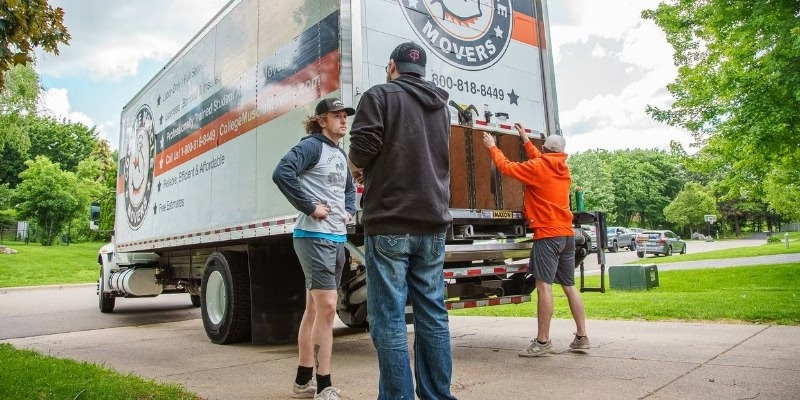
If you’ve never hired professional movers before, knowing what to expect on moving day makes the whole experience a lot less stressful. The process is more predictable than you may realize, and the day tends to go more smoothly when everyone knows their role.
This guide walks you through a College Muscle Movers move from start to finish: the courtesy call, the walkthrough, loading, the drive to your new home, unloading, and the wrap-up. If you want to know how long it will all take, our data-driven guide to move times by home size has the numbers. If you still have a lot of packing left to do, check out Keepsake PCO’s room-by-room packing guide — their team handles packing services for CMM customers.
What to expect on moving day: The Short Answer
A CMM moving day follows a predictable sequence: courtesy call before arrival, initial walk-through with your crew, loading (roughly two thirds of your total move time), transit to the new home, unloading and furniture reassembly (roughly one third of your total move time), and a final wrap-up. Your main job is to be available, answer questions as they come up, and do a thorough walkthrough at the end.
Before the Movers Arrive
Get Your Home Move-Ready
The smoother your home is to navigate, the faster and more efficiently your crew can work. Before your movers arrive:
- Make sure all boxes are packed, sealed, and labeled with their destination room. Unlabeled boxes slow down unloading significantly.
- Clear a path from each room to the front door. Movers are carrying heavy items and narrow hallways or obstacle courses create both delays and risk of damage.
- Disassemble any furniture you plan to handle yourself, or set it aside and let your crew know during the walkthrough.
- Set aside anything that is not going on the truck: items you’re transporting yourself (valuables, documents, medications, irreplaceable items), things being left behind, and anything that should not be moved.
The Courtesy Call
About 30 minutes before your scheduled start time, your CMM crew will give you a courtesy call to let you know they’re on their way. This is your last chance to do a quick sweep of the home before they arrive.
CMM backs every move with an On-Time Guarantee: if your crew is an hour or more late to start, you get $100 back. We know how important it is that your moving day stays on track, so we prioritize showing up on-time and ready to work.
When the Movers Arrive
The Sign-Off and Walk-Through
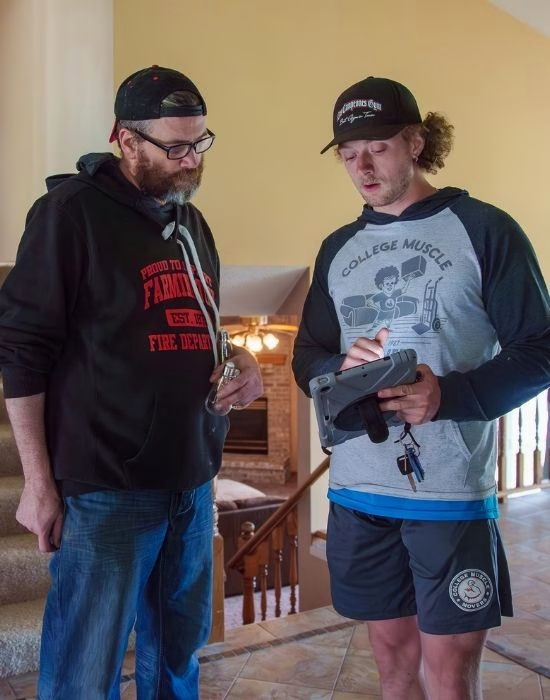
When your crew arrives, they’ll park as close to your home as possible and come to the door. Your crew lead will have you sign off on the service start using an iPad — this starts the clock on your move.
Before anything gets loaded, your crew lead will ask you to walk them through your home. This is one of the most important steps of the day. Use it to:
- Point out any furniture that needs to be disassembled by the crew
- Identify fragile or high-value items that need extra care
- Flag any logistical challenges: tight staircases, low ceilings, narrow doorways, or items that need to come out in a specific order
- Clarify anything you want to receive special handling
The more specific you are during the walk-through, the better. Your crew lead will take note of everything and brief the rest of the team.
Loading
How Your Belongings Are Protected
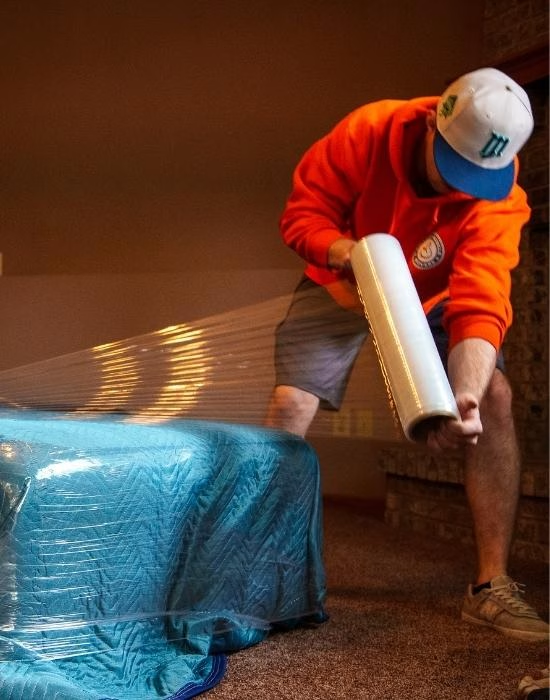
Once the walk-through is complete, your crew gets to work. CMM includes furniture pads and plastic shrink wrap on every local move — there’s no extra charge for protection materials.
Here’s how the process typically works:
- Some crew members begin padding and wrapping furniture while others start moving boxes out to the truck
- Each furniture piece is wrapped with furniture pads and secured with shrink wrap before it leaves the home
- All mattresses are required to be in a mattress bag to keep them clean during transit. If you don’t have one, your crew can provide one.
- Fragile items and anything you flagged during the walk-through get extra attention
The Loading Sequence
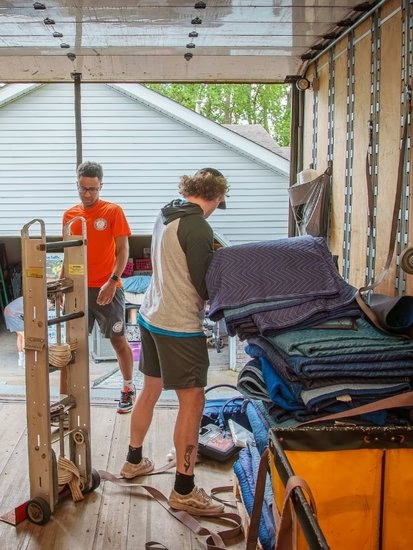
Boxes typically go first, followed by furniture. Your crew lead manages the loading sequence to make sure the truck is packed efficiently — weight distribution and item protection both factor into how things are arranged.
Loading usually takes about two thirds of your total move time. For a two-bedroom move, that might be three to four hours of loading before the truck is ready to go. This is normal and you can expect unloading at the new home to go faster.
Throughout loading, stay available. Your crew will have questions — about items they’re uncertain how to handle, about what goes and what stays, about access or logistics. You don’t need to hover, but you should be reachable.
Your crew lead will keep you updated on progress and flag anything unexpected: a piece of furniture that won’t fit through a doorway, an item that needs additional wrapping, or anything else that affects the timeline.
The Final Walk-Through Before Leaving
Before the truck leaves your current home, you and your crew lead will do a final walk-through together. Go through each room to make sure nothing gets left behind. Check:
- Basements and attics
- Inside cabinets and closets
- The garage
- Outdoor spaces and storage sheds
Take your time on this walk-through since it’s unlikely the crew is able to come back for anything left behind.
The Drive to Your New Home
Transit and the Lunch Break
Depending on the distance between your old and new home, transit is usually straightforward. Your crew drives the truck while you make your way to the new address separately. Be aware that some roads don’t allow trucks due to weight limits, so don’t be concerned if the truck takes a different route than you.
For longer moves or moves that start early, your crew may need to break for lunch between loading and unloading. This time is off the clock — you are not billed during the lunch break. Everyone on a moving crew is doing hard physical work and needs a good lunch to recharge and have energy for the unload.

Unloading
The Walk-Through at the New Home
Before unloading begins, walk your crew through the new home. Point out where each room’s contents should go and flag anything that needs to go to a specific spot. If you have a rough floor plan in mind for large furniture, share it now — it’s much easier to place a couch correctly the first time than to move it twice.
How Unloading Works
Unloading moves faster than loading. Your crew will:
- Bring boxes directly to their labeled destination rooms
- Carry furniture in and place it where you direct
- Remove shrink wrap and furniture pads as items come off the truck, returning them to the truck as they go
- Begin reassembling furniture once most items are inside — bed frames are typically reassembled toward the end so mattresses can be placed on them directly
Mattresses are usually the last items off the truck, placed onto the reassembled bed frame so your bedroom is ready to use at the end of the day.
Labeled boxes make a significant difference at this stage. A box that says “Kitchen — pots and pans” goes straight to the kitchen without you having to direct every piece. A box that says “Misc” creates extra work for everyone.
The Final Walk-Through at the New Home
Once everything is off the truck, do a walk-through of your new home with your crew lead. Make sure:
- All furniture is where you want it
- All boxes are in the right rooms
- Nothing is missing and nothing was damaged in transit
This is the time to raise any concerns about damage. Document anything you want to flag before your crew leaves.
The Wrap-Up
Service Sign-Off and Tips
When the walk-through is complete, your crew lead will stop the clock on the iPad and walk you through the close-out paperwork. This covers the final billing, any notes on the service, and confirmation that the job is complete.
At this point you’ll have the option to tip your crew. A tip is optional, your crew is paid a fair wage regardless. That said, it’s a much-appreciated way to recognize hard work, especially on a difficult move. A reasonable range is $30 to $50 per mover for a standard local move, adjusted up for moves involving a lot of stairs, heavy items, or particularly long days.
If you’d prefer to show appreciation another way, cold drinks and food mid-move are always welcome and go a long way.
The Rest of the Day Is Yours
Once your crew leaves, the move is done. You can start unpacking, tackle the most important rooms first, or take the rest of the day off and leave the boxes for tomorrow. Either way, the hard part is over.
If your old home still needs a move-out clean, you can get 15% off move-out and move-in cleaning when you also have a move booked with us. In some cases, not having to worry about cleaning at this stage is a big relief.
Moving Day Tips: Quick Reference
Before the Crew Arrives
All boxes packed, sealed, and labeled
Clear paths from each room to the front door
Valuables, documents, and medications set aside to travel with you
Items not going on the truck clearly separated
Cash ready for tips if you plan to tip
During Loading
Walk your crew through the home before anything is loaded
Stay available to answer questions
Do a final walk-through of every room before the truck leaves
At the New Home
Walk your crew through the new home before unloading
Have a rough floor plan in mind for large furniture
Check all rooms during the final walk-through before the crew leaves
FAQs About What to Expect on Moving Day
How long does moving day take?
It depends on the size of your home and crew. As a general rule, loading takes roughly two thirds of the total move time and unloading takes one third. For a detailed breakdown by home size and crew size based on five years of real CMM data, see our guide to how long a move takes.
Do I need to be present the entire time on moving day?
It’s not absolutely necessary, but it’s usually helpful ifyou are available throughout the day. Your crew will have questions during loading and will need you to direct furniture placement during unloading. If you absolutely can’t be there, designate a trusted person who knows your inventory and your floor plan at the new home.
What happens if something gets damaged during my move?
Document any damage before your crew leaves — take photos and note it with your crew lead before signing off on the service paperwork. CMM’s damage coverage policies are outlined in your confirmation document. Under Minnesota law, the minimum coverage is $0.60 per pound, but upgraded valuation coverage plans are available starting at $15. Review your confirmation document for the specifics of your coverage.
Is tipping required?
Tipping is optional but appreciated. Moving is physically demanding work, and a tip is a genuine way to recognize a job well done. A reasonable range for a standard local move is $20 to $50 per mover, adjusted for the difficulty of the job — extra stairs, heavy specialty items, or a particularly long day all factor in.
What if my movers are late?
CMM backs every move with an On-Time Guarantee: if your crew is an hour or more late to start, you get $100 back. In practice, most CMM moves start on time. If your crew is running behind, you’ll typically hear from them before your scheduled start time.
What items can't go on the moving truck?
Certain items can’t be transported on a moving truck for safety reasons — these include hazardous materials, propane tanks, gas-powered equipment with fuel still in it, and certain perishables. Drain gas from lawnmowers and snowblowers and remove propane from grills before moving day. For a full list, see our guide on what movers won’t move.
Still Looking for a Reliable Twin Cities Moving Company?
If you’re still in the planning stage of your move, we’d love to give you a free quote from College Muscle Movers. Our Service Coordinators are standing by to walk you through the moving process and answer any questions you have.
About the Author

Morgan Alexander
Moving Specialist