
Voted Minnesota's
#1 Moving Company

What Gets Damaged Most Often During a Move? Real Data from 16,000 Moves
Most moving guides tell you the same generic advice: wrap your glassware, protect your dishes, be careful with your TV. That advice isn’t wrong, but it’s incomplete, and in some cases it misses the items that actually generate the most damage claims.
First, it’s important to know that damage during a professional move is genuinely rare. Based on CMM’s claims data since 2020, 96.4% of our moves result in no item damage at all. As someone with many years of moving experience, I can tell you that the vast majority of moves go off without a single issue. This guide isn’t meant to worry you. It’s meant to help you understand the small percentage of cases where something does go wrong, why it happens, and what you can do to make an already low-risk situation even safer.
We analyzed claims data from more than 16,000 CMM moves to find out what gets damaged most often during a local move. The results are more surprising than conventional moving advice suggests.
What Items Get Damaged Most Often During a Move: The Short Answer
Professional moves are overwhelmingly damage-free: 96.4% of CMM moves result in no item damage claim at all. When damage does occur, furniture is the most commonly affected category by a significant margin. Dressers, tables, couches, desks, and bed frames generate more claims than dishes or glassware. Among fragile items, lamps and mirrors are damaged more often than flat-screen TVs. Most damage is preventable with proper wrapping, padding, and communication with your crew on moving day.
The Data: What Items Actually Get Damaged During Moves
Based on CMM’s claims data since 2020, here are the most frequently damaged items across more than 16,000 local moves:
| Item | Incidents of Damage |
| Dresser | 41 |
| Table | 32 |
| Couch | 27 |
| Desk | 22 |
| Lamp | 22 |
| Bed Frame | 21 |
| Mirror | 18 |
| Bookshelf | 17 |
| Picture Frame | 7 |
| TV | 5 |
The first thing most people notice about this list: furniture dominates. Dressers, tables, couches, desks, and bed frames collectively account for well over 100 claims, more than all fragile items combined. The second thing: lamps appear alongside furniture in the top five, ahead of mirrors and TVs, which most people worry about far more.
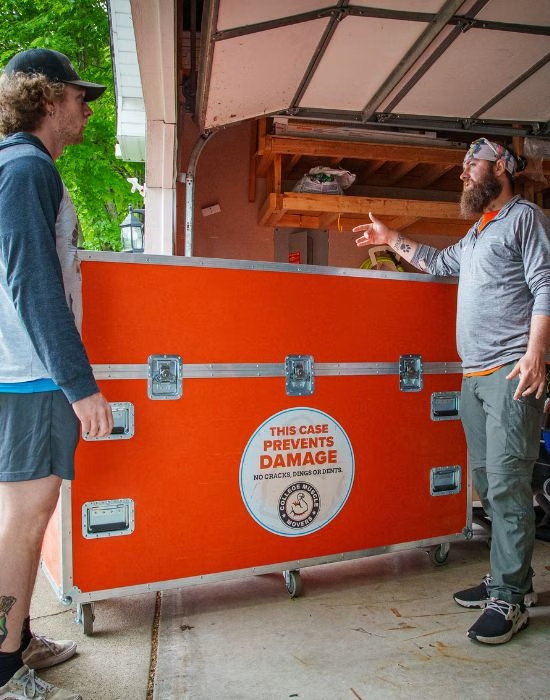
Our hard-sided TV Road Case is the best way to protect flat screens.
Furniture is the Most Commonly Damaged Item
Furniture damage surprises most people. It’s not the category they prepare for. But when you think about what furniture goes through during a move (carried through doorways, maneuvered around tight corners, loaded and unloaded from a truck), it makes sense that it’s vulnerable.
Dressers (41 claims)
Dressers are the most commonly damaged item in CMM’s experience. The damage typically falls into two categories: surface damage (scratches and gouges to the finish) and structural damage (broken legs, cracked sides, or damaged drawer faces). Dressers are heavy, awkward to carry, and often made of finished wood that shows scratches easily.
What helps: Remove all drawer contents before moving day. Drawers should come out and be wrapped or moved separately. The dresser body should be wrapped in furniture pads and sealed in plastic wrap before leaving the room.
Tables (32 claims, including dining tables)
Table damage most often involves legs and surface scratches. Table legs are vulnerable when a table is carried or loaded at an angle, and the surface is easily scratched if a pad slips during loading. Glass-topped tables carry additional risk at the glass surface and the hardware connecting the glass to the frame.
What helps: Remove glass tabletops and wrap them separately. Pad table legs individually and wrap the entire piece before moving. For dining tables, disassemble legs if possible.
Couches (27 claims)
Couch damage typically involves fabric tears, broken legs, or frame damage that occurs when maneuvering through tight doorways or stairwells. Sectionals are particularly vulnerable because individual pieces can be awkward to carry and may not fit cleanly through a doorway without specific handling.
What helps: Point out any tight doorways or narrow stairwells during the initial walk-through. Let your crew assess the best path before any carrying begins. Disassembling sectional connectors before the move reduces the risk of frame stress during transit.
Desks (22 claims)
Desks, particularly large L-shaped or standing desks, face similar risks to tables: surface scratches, leg damage, and frame stress during narrow carries. Glass surfaces and monitor arms are additional points of vulnerability.
What helps: Remove any glass components and wrap them separately. Collapse or remove monitor arms and adjustable components before moving day.
Bed Frames (21 claims)
Bed frame damage usually involves bent or broken slats, cracked rails, or hardware stripped during disassembly. Metal frames are particularly vulnerable to bending if picked up incorrectly, and wood frames can crack at joints under lateral stress.
What helps: Disassemble bed frames completely before moving day. Store all hardware in labeled bags taped to the frame pieces. A fully disassembled bed frame is significantly easier to move and far less likely to be damaged than one partially assembled.
Bookshelves (17 claims)
Bookshelf damage typically involves cracked backs, stripped hardware from assembly and disassembly, or surface damage to shelves. Inexpensive particleboard bookshelves are particularly vulnerable. The material doesn’t handle the stress of moving well, and CMM’s liability coverage excludes particleboard and pressed wood furniture by policy.
What helps: Solid wood bookshelves should be fully wrapped and padded. For particleboard units, consider whether the value of the piece justifies the moving cost. Some are better replaced than moved.
Fragile Items: What Actually Breaks
Lamps (22 claims)
Lamps generate more damage claims than TVs or mirrors, which most people spend far more time worrying about. Glass shades are the primary point of failure: they separate from the base during carrying, shatter when set down too hard, or crack when a lamp slips from someone’s hands. The base itself is also vulnerable when not properly padded.
What helps: Pack the shade and base separately. The shade needs its own box with cushioning on all sides. It should not be placed inside the base box or left unwrapped. Label lamp boxes clearly and instruct your crew not to stack anything on top of them.
Mirrors (18 claims)
CMM’s damage descriptions reveal something useful about mirrors: most damage happens during unloading and unwrapping, not during transit. A corner catches on something during unwrapping, or two people misjudge the weight distribution and lose control at a critical moment. Mirrors that were safely transported often get damaged in the last thirty seconds of the move.
What helps: Tape an X of masking tape across the glass surface before wrapping. If the glass does crack, the tape holds pieces together and prevents a dangerous unwrapping situation. Always position mirrors vertically, not flat. Store wrapped mirrors against the truck wall where they can’t shift.
Flat-Screen TVs (5 claims)
TV damage most often involves cracked corners or screen damage from contact with another item during transit. TVs are occasionally damaged by the stand rather than the screen. A stand that wasn’t packed separately can come loose and crack the cabinet.
What helps: A TV box is the most effective protection. If you no longer have the original packaging, specialty TV boxes are available in several sizes. Remove the stand and pack it separately. The screen should never face another hard surface without substantial padding between them.
Why Damage Happens on a Move
Looking across CMM’s claims data, a few patterns appear repeatedly. In my experience reviewing claims, the most preventable damage is almost always tied to one of these four things, and the most common one is the walk-through.
Items that weren’t flagged during the walk-through. Your crew lead walks through your home before loading begins specifically to identify fragile items, tight spaces, and anything requiring special handling. Items that weren’t mentioned are handled with standard care, which may not be sufficient for particularly delicate or valuable pieces. This is the single most impactful thing a customer can do on moving day: be thorough during the walk-through and speak up about anything you’re worried about.
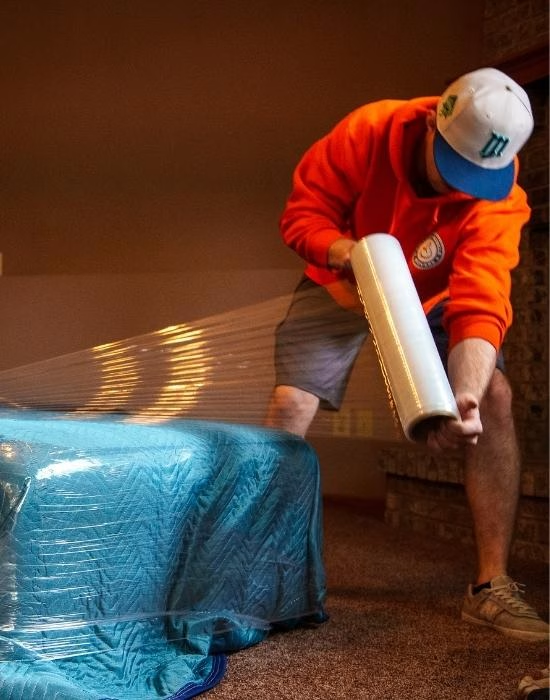
Items that weren’t wrapped. Furniture placed on the truck without furniture pads and plastic wrap is exposed to contact damage during the entire move. A scratch that would have been caught by a pad shows up on the delivered piece.
Items in partial or poor condition before the move. CMM’s policy does not cover items that were already damaged or in a state of disrepair at the time of the move. If a leg was already loose or a surface already scratched, that existing damage is excluded from coverage.
Particleboard and pressed wood furniture. This category is explicitly excluded from CMM’s liability coverage. Particleboard doesn’t handle the physical stress of a move the way solid wood does, and damage is common regardless of how carefully the piece is handled.
What CMM Does to Prevent Damage
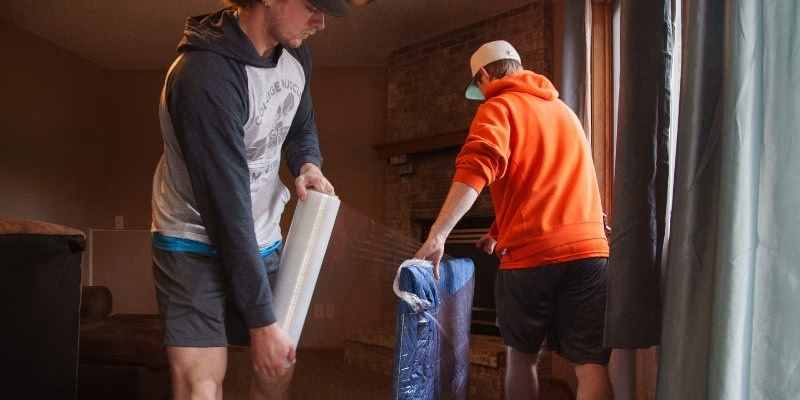
Every CMM local move includes furniture pads and plastic shrink wrap at no extra charge. Your crew pads and wraps furniture before it leaves the room. The walk-through at the start of the service is specifically designed to catch fragile items, tight spaces, and anything that needs extra attention.
For genuinely high-value items like fine art, antiques, and irreplaceable family heirlooms, CMM recommends transporting them in your personal vehicle. If that isn’t possible, let your moving consultant know before moving day so the crew can plan accordingly.
CMM also offers valuation coverage plans starting at $15 that provide protection beyond the standard Minnesota minimum of $0.60 per pound. If you have items of significant value, upgraded coverage is worth considering before moving day rather than after.
FAQs About What Items Get Damaged During Moves
What is the most commonly damaged item during a local move?
Based on CMM’s claims data since 2020, dressers are the single most frequently damaged item, followed by tables, couches, desks, and lamps. Furniture as a category generates significantly more claims than fragile items like dishes or glassware.
Is moving damage common?
No. 96.4% of CMM moves result in no item damage claim at all. Damage is the exception, not the rule. Understanding what tends to go wrong helps you take the right precautions for the small percentage of moves where something does get damaged.
Does moving insurance cover all damaged items?
Not all items are covered under standard moving liability. CMM’s standard coverage follows the Minnesota minimum of $0.60 per pound of damaged item. Particleboard, pressboard, and similar pressed wood furniture is explicitly excluded from coverage. Upgraded valuation coverage plans are available starting at $15 and are worth considering for valuable or irreplaceable items.
How can I prevent my furniture from being damaged on my move?
The most effective steps are: fully disassemble bed frames and remove dresser drawers before moving day, point out any fragile or valuable items during the crew walk-through, and make sure all furniture is padded and wrapped before it goes on the truck. CMM includes furniture pads and shrink wrap on every local move at no extra charge.
What should I do if something gets damaged during my move?
Document the damage before your crew leaves. Take photos and note it with your crew lead before signing off on the service paperwork. Raise any concerns before signing the close-out documents. CMM’s damage handling policies are outlined in your confirmation document.
Should I pack my own boxes or hire professionals?
Items packed by the customer are treated differently under liability policies. If a customer-packed box is damaged, the burden of proof shifts to the customer to demonstrate mover negligence. For genuinely fragile items, professional packing removes that ambiguity. Keepsake PCO, CMM’s partner brand, offers full and partial packing services coordinated around your move date.
Ready to book your move?
College Muscle Movers has completed more than 16,000 moves across the Twin Cities since 2020. Our crews are trained, our equipment is included, and our track record speaks for itself.
Get a quote today and a service coordinator will be in touch shortly.
About the Author

Morgan Alexander
Moving Specialist