
Voted Minnesota's
#1 Moving Company

Should I Hire Movers or Do It Myself? (And Are They Worth the Cost?)

When a move is on the horizon, most people ask the same two questions: should I hire movers, or do it myself? And are professional movers actually worth it?
It’s a fair question, and as a moving company we’ll be upfront: we think hiring professionals is worth it in most situations. But we also recognize there are cases where doing it yourself makes sense, and we’d rather help you think through it honestly than just tell you to hire us.
In this post we’ll walk through when a DIY move is a reasonable option, when it isn’t, and what you’re actually getting when you hire a professional moving company. By the end you’ll have a clear framework for making the right call for your situation.
Quick Answer: Should you hire movers or do it yourself?
- Professional movers are worth it for most people, especially if you have valuable belongings, stairs or tricky logistics, or limited help available.
- DIY moving makes sense only if you have multiple committed helpers, aren’t moving anything fragile or irreplaceable, and are working with a tight budget.
- The true cost of moving yourself goes beyond truck rental. Factor in your time, physical effort, injury risk, and potential damage to your belongings and home.
When Moving Yourself Can Make Sense
DIY moving isn’t always the wrong call. There are situations where renting a truck and doing it yourself is a reasonable option:
You have several able-bodied friends or family members who are genuinely willing to help. It’s important that they’re not just willing in theory, but committed to showing up and working hard for as long as it takes.
Your belongings aren’t especially valuable or fragile. If you’re not moving furniture you care deeply about, artwork, antiques, or anything that would be costly or irreplaceable to replace, the stakes of a DIY move are lower.
You’re moving a small amount of stuff. A studio apartment with minimal furniture and a dozen boxes is a manageable DIY job. A three-bedroom house accumulated over ten years is a different story.
You’re highly budget-conscious and the savings genuinely outweigh the tradeoffs for your situation.
If all of those things are true, doing it yourself is worth considering. If even one of them isn’t, keep reading why hiring movers may be worth it for you.
What Most People Underestimate About Moving Yourself
The gap between how people imagine a DIY move and how it actually goes is one of the most consistent things we see in this industry.
Moving is physically demanding in a way that’s hard to appreciate until you’re three hours in, carrying a dresser down a flight of stairs, and realizing you still have a full truckload left to unload at the other end. It takes sustained physical effort from multiple people over many hours, and unlike a workout, you can’t stop when you’re tired.
It also takes more experience than most people realize. Loading a moving truck efficiently isn’t intuitive. It takes skills that professional movers develop over hundreds of jobs, like knowing how to pad and wrap furniture so it doesn’t shift in transit, how to stack boxes so nothing gets crushed, how to angle a sectional through a tight doorway. Without that experience, it’s easy to underestimate how much time and truck space you need, and easy to make mistakes that cost you more in the end.
To put some numbers behind it: based on our own data from thousands of Twin Cities moves, a professional crew of 3 movers takes an average of about 4 hours to complete a 2-bedroom move from start to finish. An inexperienced group of friends working the same job will almost always take significantly longer. Time your friends spend helping you move is time they’re giving up, and the goodwill of asking people to spend most of their Saturday doing hard physical labor has its limits.

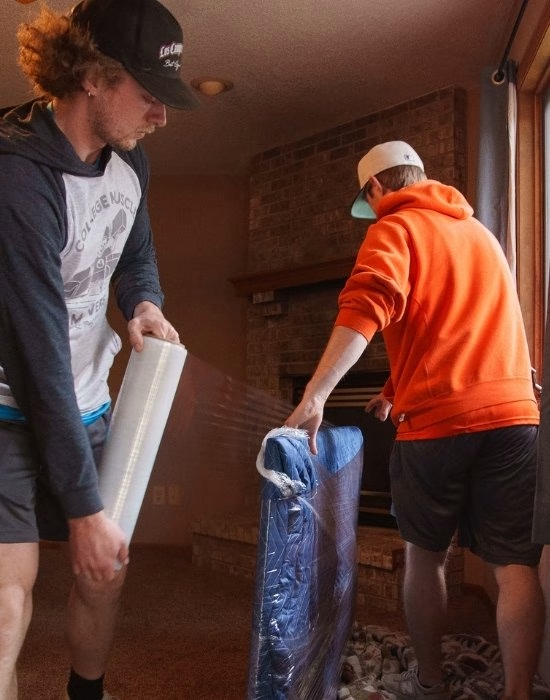
Moving takes experience and skill to keep your home and belongings safe.
The Real Risks of DIY Moving
Beyond the time and effort, there are genuine risks to moving yourself that are worth taking seriously.
Injury. Improper lifting and carrying technique is one of the most common causes of back and joint injuries. Professional movers are trained in proper technique and work as a coordinated team. A group of well-meaning friends carrying a sofa down a narrow staircase without that training is a different situation. Injuries on moving day are more common than people expect, and recovering from a back injury in the middle of a move is a genuinely bad situation.
Damage to your belongings. Without experience padding, wrapping, and securing items for transit, furniture and valuables are vulnerable. Items that aren’t properly wrapped shift in the truck. Furniture that isn’t loaded correctly gets scratched or dinged. A television that isn’t secured can slide across the truck bed on a sharp turn. Professional movers carry the equipment and know-how to protect your belongings throughout the process, plus they carry cargo insurance to back it up.
Damage to your home. Walls, floors, doorframes, and banisters take a beating during a move. Professional crews use floor runners, door jamb protectors, and padding to minimize the risk. Without that equipment and experience, the likelihood of scuffs, dents, and scratches goes up significantly, which can cost you at move-out.
The stress of things going wrong. When a DIY move hits a snag — the truck is too small, a piece of furniture won’t fit through the door, a friend cancels last minute, the move runs until 11pm — there’s no professional crew to problem-solve. What starts as a manageable Saturday project can turn into a stressful, exhausting ordeal that puts unnecessary strain on your body, your relationships, and your new home.
Why Professional Movers Are Worth It: What You’re Actually Paying For
When people think about the cost of hiring movers, they often think of it as paying for labor. What you’re actually paying for is experience, equipment, and accountability. When it comes to the success of a move, those things have real value.
Experience means a crew that has completed hundreds or thousands of moves. They know how to load a truck efficiently, handle difficult logistics, protect your belongings, and keep a job moving forward when something unexpected comes up. That experience translates directly into a faster, smoother move.
Equipment means professional-grade moving pads, straps, dollies, floor runners, and a properly sized truck. The difference between moving with the right equipment and improvising with whatever’s on hand is significant, both in the speed of the job and the safety of your belongings.
Accountability means a company that shows up when they say they will, communicates with you throughout the process, and takes responsibility if something goes wrong. At College Muscle Movers, we back every job with our On-Time Guarantee: if we arrive more than an hour late, you get $100 back. We will never call you two days before your move to tell you we aren’t coming. And if something goes wrong during your move, we don’t disappear — we make it right.
That last point matters more than people realize until they need it.
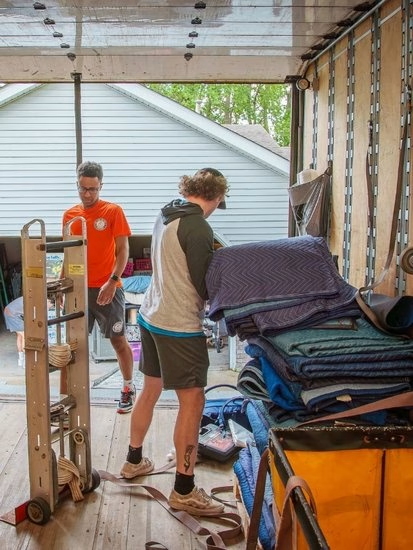
College Muscle Movers provides all the equipment needed to get the job done efficiently.
Why the Cheapest Mover isn’t Always the Best Value
When you’re comparing quotes, it can be tempting to go with the lowest number. In moving, that’s often a mistake.
Budget movers frequently reflect the quality of the service, and more importantly, the accountability when something goes wrong. An unlicensed or underinsured mover may quote you a lower rate, but if a piece of furniture gets damaged or a crew member gets injured on your property, your recourse is limited to nothing.
You get what you pay for in this industry. A professional, licensed moving company charges more because they carry proper insurance, employ trained crews, maintain quality equipment, and operate with the kind of accountability that protects you as a customer.
One specific thing to watch for: a reputable moving company will give you a detailed estimate based on a full inventory of your belongings, not just a rough range based on how many bedrooms you have. A detailed estimate means fewer surprises on moving day, and it’s a sign that the company actually knows what they’re doing.
For everything you need to know before hiring movers, see our guide to choosing a moving company in the Twin Cities.
Signs that Hiring Movers is Worth it For You
Still wondering whether you should hire movers or not? If any of the following apply to your situation, professional movers are worth it.
- You have large, heavy, or specialty items — furniture, appliances, a piano, a gun safe, or exercise equipment that requires proper handling
- Your move involves stairs, an elevator, a long carry, or other logistical challenges
- You have valuable, fragile, or irreplaceable belongings
- You don’t have several able-bodied people available to help
- Your timeline is tight and you can’t afford for the move to run long
- You’re moving a larger home — anything 2 bedrooms or more with a full household of belongings
- You simply want the move done right without the physical and logistical burden falling on you
For most people, at least one of these applies. And for most people, professional movers are worth it — not just for the convenience, but for the peace of mind that comes with knowing your belongings are in experienced hands and that someone will show up and follow through.
FAQs: Should You Hire Movers
When does it make sense to hire movers instead of moving yourself? Hiring movers is worth it when you have large or heavy furniture, stairs or tricky logistics, valuable or fragile belongings, or limited help available. If you’re moving anything larger than a studio apartment with minimal furniture, professional movers will almost always save you time, physical effort, and the risk of damage or injury.
Are professional movers worth the cost? For most people, yes. What you’re paying for isn’t just labor — it’s experience, equipment, and accountability. A professional crew completes moves faster and more safely than an inexperienced group, and a licensed company carries the insurance to back up their work if something goes wrong.
How much do movers cost in the Twin Cities? Most local moves in the Twin Cities cost between $330 and $4,040 depending on home size. A standard 1-bedroom move typically runs $420 to $900, and a 2-bedroom runs $780 to $1,520. For a full breakdown by home size, see our guide to moving costs in the Twin Cities.
What are the real risks of moving yourself? The biggest risks are injury from improper lifting, damage to your belongings from inadequate wrapping and securing, damage to your home from moving furniture through tight spaces without protective equipment, and the stress of things going wrong without a professional crew to problem-solve.
Do I need movers for a small move? Not always. A studio apartment with minimal furniture and several able-bodied helpers can be a manageable DIY job. But if you have heavy furniture, stairs, a long carry, or anything fragile or irreplaceable, the risk-to-savings ratio of doing it yourself goes up quickly even for smaller moves.
Is it cheaper to hire movers in winter in Minnesota? Yes — winter is off-peak season in Minnesota, which means lower rates and better availability. At College Muscle Movers, rates are lower during the winter months. The tradeoff is added logistics around snow, ice, and cold temperatures, but with the right crew those are manageable.
Ready to Find Out What Professional Movers Would Cost for Your Move?
The best way to make an informed decision between DIY and professional is to know what professional would actually cost for your specific move. You might find it’s more accessible than you expected — especially when you factor in the value of your time, the physical toll, and the risk of things going wrong.
At College Muscle Movers, we’ve completed more than 15,000 moves across the Twin Cities over the last five years. We build every estimate around the specifics of your job — your items, your locations, your logistics — so you get an accurate picture upfront.
Request a free quote from College Muscle Movers and we’ll put together an estimate tailored to your move. And if you want to understand what goes into the cost before you reach out, our guide to moving costs in the Twin Cities breaks it all down.
About the Author

Morgan Alexander
Moving Specialist