
Voted Minnesota's
#1 Moving Company

How to Move Heavy Furniture Safely: Techniques, Equipment & When to Hire Movers

Whether you’re moving across town or rearranging a room, knowing how to move heavy furniture safely can prevent injuries, damaged belongings, and costly repairs to your home. Large couches, solid wood dressers, refrigerators, washers, and other oversized items often weigh far more than people expect, and moving them incorrectly can result in strained backs, scratched hardwood floors, gouged drywall, or broken furniture.
At College Muscle Movers, we’ve moved thousands of heavy household items throughout Minnesota. One thing we’ve learned is that successful moves rely less on brute strength than on planning, proper equipment, and teamwork.
In this guide, you’ll learn how professional movers approach heavy furniture, which tools make the job safer, common mistakes to avoid, and when it’s time to call in experienced help.
Before You Lift Anything, Make a Plan
As professional movers, we don’t just grab furniture and start lifting. Every heavy item is evaluated before it gets moved.
Before you begin:
- Measure the furniture’s dimensions, then measure every doorway, hallway, staircase, and elevator along the route.
- Remove doors if additional clearance is needed. House doors, interior doors, and even refrigerator doors can sometimes be removed to gain a few critical inches.
- Protect hardwood, tile, or freshly finished flooring before the move begins, not after something goes wrong.
- Remove artwork, lamps, and fragile items from the path entirely.
- Decide where you’ll set the item down if you need to rest. Never start moving a heavy object without a safe stopping point identified in advance.
- Identify who will lead the move and who will call directions.
Disassembly is also worth considering before any major move. Bed frames, dining tables, sectional sofas, and most exercise equipment are not designed to be moved while assembled. It may be tempting to skip disassembly to save time, but moving these items assembled significantly increases the risk of damage to the item, your walls, and your floors. When in doubt, take it apart.
Many accidents happen because people realize halfway through a stairwell that the furniture won’t fit, or that someone has lost their grip. Spending five minutes planning can save hours of frustration and expensive repairs.
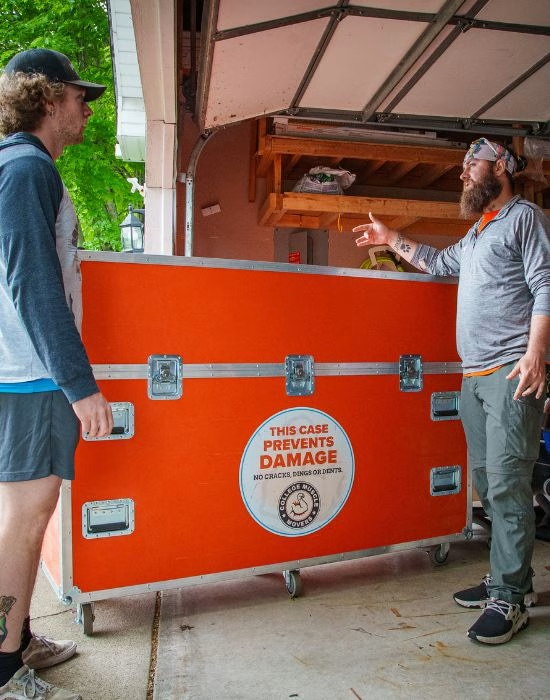
How Much Does Heavy Furniture Actually Weigh?
One of the most common mistakes in a DIY move is underestimating how heavy an item actually is. These are typical weights for common household items:
| Item | Approximate Weight |
|---|---|
| Sofa | 150–250 lbs |
| Sleeper Sofa | 250–400 lbs |
| Solid Wood Dresser | 150–300 lbs |
| Refrigerator | 250–400 lbs |
| Washer | 180–230 lbs |
| Dryer | 120–180 lbs |
| Upright Piano | 300–800 lbs |
| Grand Piano | 500–1,200 lbs |
| Gun Safe | 300–1,000+ lbs |
| Treadmill | 200–350 lbs |
Remember, weight is only part of the challenge. Awkward shapes, uneven weight distribution, and navigating stairs often make an item far harder to handle than the number on the scale suggests. Treadmills are a good example: they frequently surprise people not just because of their weight, but because their shape makes them difficult to grip and lift from most angles.
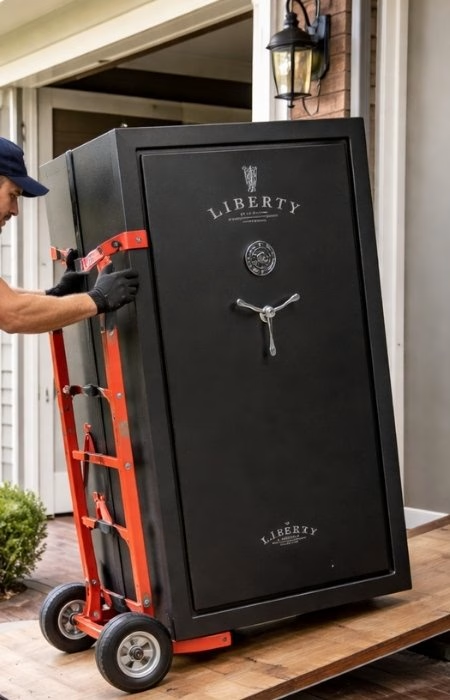
Equipment That Makes Moving Heavy Furniture Easier
Every heavy item presents different challenges, which is why professional movers rely on specialized equipment rather than brute force. The right tools reduce lifting strain, improve control, and protect both your belongings and your home.
Moving Blankets and Stretch Wrap
Professional movers pad and wrap furniture before moving it. Thick moving blankets protect wood finishes, upholstery, and delicate corners from bumps and scrapes. Stretch wrap keeps blankets securely in place so they don’t shift mid-move.
From Our Experience: We always pad and wrap furniture before moving it whenever the item allows. A few minutes spent protecting a dresser or dining table can prevent chips, scratches, and dents that are difficult, sometimes impossible, to fix afterward.
Exercise equipment is the main exception. Because treadmills, ellipticals, and home gym machines have exposed arms and pedals that create awkward shapes, padding and wrapping would obscure the grip points movers need to safely control the item.

Forearm and Shoulder Lifting Straps
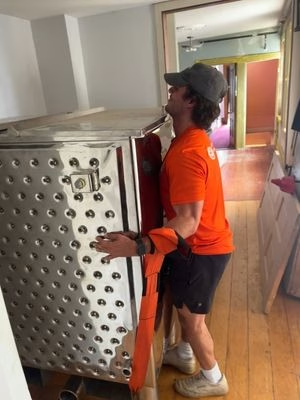
Lifting straps help distribute weight more evenly across the body, reducing strain on the back and allowing movers to maintain better control through tight hallways, around corners, and on stairs. Even with straps, proper technique and clear communication between movers remain essential.
Piano Boards
Pianos require specialized handling. Professional movers use piano boards to safely secure and stabilize both upright and grand pianos during transport. Attempting to move a piano without proper equipment can easily damage the instrument, the home, or cause serious injury.
Furniture Sliders
Furniture sliders allow heavy items to glide across hardwood, tile, or carpet with far less effort than lifting. They’re especially useful for large couches, entertainment centers, and dressers, and they protect finished floors from scratches in the process.
Moving Tip: Never slide furniture directly on hardwood floors, even short distances. Use sliders, and use proper lifting technique to get the item into its final position. A few seconds of dragging can leave scratches that are difficult or impossible to repair.
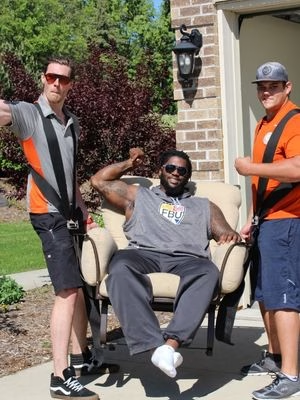
Using the proper equipment, like shoulder straps, makes it easy to lift heavy objects, even former Minnesota Vikings player Sharrif Floyd.
Appliance Dollies
An appliance dolly is designed specifically for transporting heavy appliances like refrigerators, freezers, washers, and dryers. The item is secured to the dolly with straps and rolls instead of being carried, providing greater control, especially on uneven surfaces or when loading into a truck.
From Our Experience: Refrigerators are among the most common heavy appliances we move, and one of the items homeowners most often underestimate. Even when the weight feels manageable, their size and uneven balance make them difficult to control in tight spaces. We use a heavy-duty appliance dolly on virtually every refrigerator move.
Lift Gates
One piece of equipment homeowners rarely think about is the truck lift gate.
Rather than carrying an extremely heavy item up a loading ramp, professional crews can use a hydraulic lift gate to safely raise the item into the truck. This reduces lifting strain and improves safety for the heaviest loads.
From Our Experience: We reserve the lift gate for the heaviest items, primarily gun safes, pianos, and similarly oversized loads. Most refrigerators, dressers, and armoires can be safely carried up the ramp by an experienced crew. That said, if you’re not a practiced mover, carrying even moderately heavy furniture up a ramp is harder than it looks. The lift gate eliminates that risk for the items where it matters most.
How to Move Heavy Appliances Safely
Heavy appliances present unique challenges because they’re bulky, awkwardly balanced, and often connected to plumbing, electrical, or gas lines. The most commonly moved appliances include refrigerators, washers, dryers, and freezers.
Before moving any appliance:
- Disconnect all utility connections. For gas appliances, hire a licensed technician.
- Empty the appliance completely.
- Secure all doors so they cannot swing open during the move.
- Protect floors with sliders or floor coverings before the appliance moves an inch.
- Keep refrigerators upright whenever possible. Laying a refrigerator on its side can allow compressor oil to flow into the cooling lines, potentially causing damage. If a refrigerator must be tilted, keep it on its back rather than its side, and allow it to stand upright for at least 24 hours before plugging it in.
- Remove transit bolts from washers after installation. Running a washer with transit bolts still installed will damage the drum suspension, a step that is easy to forget after a long moving day.
Even with an appliance dolly and proper preparation, appliances can weigh several hundred pounds. Having enough people to safely control the load is always more important than moving quickly.
Common DIY Mistakes When Moving Heavy Furniture
- Underestimating how much the item actually weighs
- Starting the move with too few people
- Failing to pad and wrap furniture before moving it
- Sliding furniture directly on hardwood floors
- Damaging drywall when turning corners or navigating staircases
- Using the wrong dolly or no dolly at all
- Trying to muscle an item through a tight space instead of tilting, pivoting, or rotating it
- Not having a plan for where to rest if the item becomes too heavy mid-move
From Our Experience: One of the biggest differences between experienced movers and homeowners isn’t strength. It’s knowing exactly how to tip, rotate, and pivot heavy items through difficult spaces. That knowledge comes from moving a lot of furniture through a lot of doorways. When things don’t go smoothly, it usually comes down to not having a plan before the lift starts.
When DIY Moving Becomes Too Risky
Many furniture moves can be handled safely with proper planning, the right equipment, and enough help. But some situations carry significantly greater risk.
Consider hiring professional movers when you’re dealing with:
- Large refrigerators
- Gun safes
- Pianos
- Commercial or heavy exercise equipment
- Oversized sectionals
- Antique or irreplaceable furniture
- Items weighing several hundred pounds
- Furniture that needs to go up or down multiple flights of stairs
- Staircases with a turn at the top, bottom, or middle
Stairways pose one of the greatest challenges in any move. Gravity shifts the load, reduces your margin for error, and eliminates any real ability to set the item down safely if something goes wrong. A staircase with a mid-flight landing turn compounds that challenge significantly.
Professional moving companies often assign more than two movers to pianos, gun safes, and other exceptionally heavy items. Additional movers are especially necessary when stairs or turns are involved so they can help support and make sure the item does not fall off the dolly or tip over. If you’re attempting a similar move yourself, always have additional people available before you start.
Some items, including pianos, gun safes, and commercial gym equipment, require specialized equipment and moving techniques that go beyond what most homeowners have access to. These items are generally not recommended for DIY moves.
Why Professional Movers Make Moving Look Easy
Many homeowners assume professional movers simply have more strength. In reality, experience is usually the bigger advantage.
Professional movers learn how to:
- Shift weight instead of fighting it
- Maintain an item’s center of gravity through turns and transitions
- Communicate before every lift, not during it
- Pivot furniture through tight corners without forcing it
- Recognize when a third or fourth crew member is needed before the lift begins
- Use specialized equipment so that tools, not backs, do most of the work
Moving Tip: The strongest person on the crew shouldn’t always be at the heaviest end. Positioning depends on the shape of the item, the direction of travel, the staircase layout, and who has the best sightlines. A good crew figures that out before anyone lifts.
As professional movers, our goal isn’t to overpower heavy furniture. It’s to move it in a controlled, predictable way that protects the item, the home, and everyone involved.
Should You Move It Yourself? A Quick Decision Guide
| Item | DIY-Friendly | Extra Help Needed | Hire Movers |
|---|---|---|---|
| Coffee Table | ✓ | ||
| Nightstand | ✓ | ||
| Sofa | ✓ | Usually | |
| Dresser | ✓ | Sometimes | |
| Refrigerator | ✓ | Sometimes | |
| Washer & Dryer | ✓ | Sometimes | |
| Large Sectional | ✓ | Sometimes | |
| Gun Safe | ✓ | ||
| Upright Piano | ✓ | ||
| Grand Piano | ✓ | ||
| Gym Equipment | ✓ |
Our recommendation isn’t based solely on weight. Stairs, tight hallways, delicate finishes, and the need for specialized equipment all factor into whether a move can be completed safely without professional help.
Heavy Furniture Moving Checklist
Before moving any heavy furniture, work through this list:
- Have I measured every doorway, hallway, and staircase along the route?
- Do I have enough people to safely handle the weight?
- Is everyone wearing closed-toe shoes with good traction?
- Do I have furniture sliders, a dolly, or lifting straps?
- Have I protected floors and walls?
- Have I cleared and checked the entire path?
- Have I disassembled anything that should be disassembled?
- Do I know where I’ll set the item down if I need a break?
- Have I disconnected all appliance utilities?
- Is this item too heavy, awkward, or valuable for a DIY move?
If the answer to several of these is no, it’s worth reconsidering whether the move can be completed safely without professional help.
FAQs About How to Move Heavy Furniture
Can two people move heavy furniture?
It depends on the size, weight, and shape of the item. Two people can often handle couches, dressers, and many appliances with the right equipment. Larger or heavier items, particularly anything on stairs, may require additional help. Never hesitate to add people if the load feels unsafe.
Can one person move a refrigerator?
Not safely in most cases. Refrigerators weigh 250–400 lbs and are awkwardly balanced. Even with an appliance dolly, controlling that much weight alone, especially on stairs or a loading ramp, presents serious injury risk.
What is the safest way to move a refrigerator?
Disconnect the appliance, empty it completely, secure the doors, and use an appliance dolly with at least two people. Keep it upright during transport. If it must be tilted, keep it on its back rather than its side, and wait at least 24 hours before plugging it in.
What is the safest way to move a washing machine?
A washer weighs 180–230 lbs and contains a concrete counterweight for balance. Moving one without a dolly significantly increases the risk of injury and floor damage. An appliance dolly is strongly recommended.
Can furniture sliders be used on hardwood floors?
Yes. Furniture sliders are one of the best tools for protecting hardwood floors during a move. Use felt-pad sliders on hardwood and hard plastic sliders on carpet. Never drag furniture directly on hardwood, even short distances.
Should I empty dresser drawers before moving?
Yes. The contents add significant weight and can shift during the move. Once the drawers are empty, cover the dresser in a moving blanket and seal it tightly in shrink wrap to keep it protected. If your dresser is especially heavy, you could consider removing the drawers completely before moving.
What equipment do I need to move heavy furniture?
For most moves: furniture sliders, moving blankets, stretch wrap, and lifting straps. For appliances: an appliance dolly. For pianos: a piano board. For extremely heavy items, consider whether a professional crew is the right call.
When should you hire professional movers instead of doing it yoursefl?
When the move involves stairs, items weighing several hundred pounds, pianos, gun safes, commercial gym equipment, or anything where a mistake could cause serious injury or irreparable damage to your home or belongings.
Need Help Moving Heavy Furniture?
Moving heavy furniture isn’t just about strength. It’s about preparation, the right equipment, and teamwork. Most household items can be moved safely when you plan the route, protect your floors and walls, recruit enough help, and use proper lifting technique.
But heavy appliances, pianos, gun safes, and oversized furniture often require specialized tools and additional crew members that go beyond what a typical DIY move can provide. When you’re unsure whether a move can be done safely, it’s worth talking to experienced movers before risking injury or costly damage to your home or belongings.
Get a quote today and a service coordinator will be in touch shortly.
About the Author

Morgan Alexander
Moving Specialist