
Voted Minnesota’s #1 Moving Company

How Much Do Movers Cost in the Twin Cities?
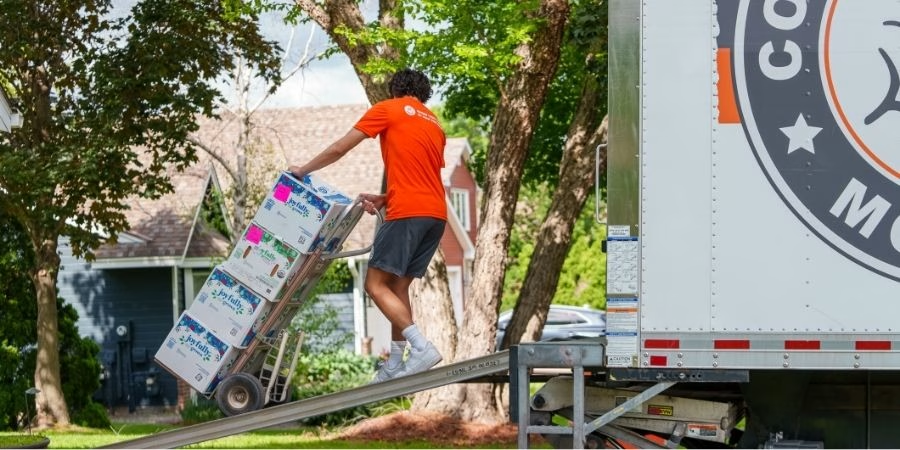
If you’re considering moving soon, the first question you’re probably asking is how much do movers cost in the Twin Cities. The honest answer is that it depends on a number of factors specific to your move. But based on more than 15,000 moves completed by College Muscle Movers over the last five years, we can give you a reliable ballpark — and a clear picture of what impacts total moving costs.
Average Moving Costs in the Twin Cities by Home Size
The figures below are based on over 15,000 Twin Cities moves completed by College Muscle Movers over the last five years, adjusted for today’s prices. They represent the range of what most customers pay for a local move at each home size — from straightforward jobs on the lower end to more complex moves on the higher end.
These ranges reflect the variety of real-world circumstances that affect how long a move takes — and therefore what it costs. A studio apartment with a single truckload and surface parking is a very different job than a studio on the fourth floor of a walkup with a long carry to the street. The same principle applies at every home size.
| Home Size | Average Cost Range |
| Studio | $330 – $585 |
| 1 Bedroom | $420 – $900 |
| 2 Bedroom | $780 – $1,520 |
| 3 Bedroom | $1,320 – $2,120 |
| 4 Bedroom | $1,920 – $2,870 |
| 5+ Bedroom | $2,220 – $4,040 |
What’s Included in a Typical Moving Quote?
Most local moving companies in the Twin Cities — including College Muscle Movers — charge by the hour, billed in 15-minute increments, with a one-hour minimum per job. Your total bill is made up of two components:
- The hourly rate covers the time your crew spends on the job from arrival to completion — loading, driving between locations, and unloading. The rate varies based on the size of your crew, which is determined by the scope of your move.
- The travel fee covers the mileage from our warehouse to your starting location, plus the mileage from your ending location back to our warehouse. This is standard practice among local movers and ensures the cost of getting your crew to and from your job is accounted for transparently.
Additional fees are often applied for handling specialty items or adding other relevant services, which we cover below.
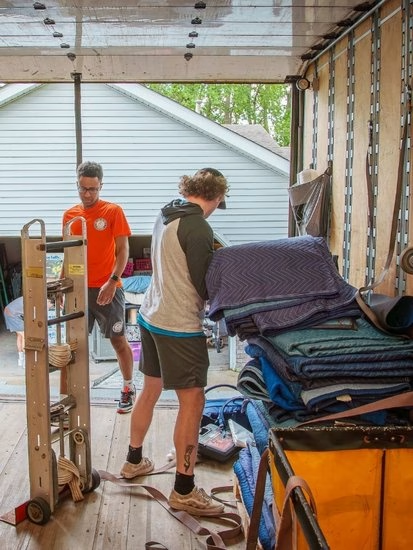
Every College Muscle Movers quote comes with the necessary equipment and supplies included.
What Affects How Much Your Move Costs?
Within any home size category, a wide range of factors determines where your move lands in the cost range. The main ones:
Volume and size of items. The more you’re moving — and the heavier and bulkier the individual pieces — the longer the job takes. A lightly furnished apartment moves much faster than one packed with furniture, artwork, and years of accumulated belongings.
Carry distance at each location. This is the distance between your front door and the moving truck. A ground-floor unit with parking right outside is faster than a third-floor walkup with a loading zone at the end of the block. The same applies at the destination.
Stairs, elevators, and tight spaces. Flights of stairs, elevator coordination, narrow hallways, and sharp turns all add time. These aren’t surprises — they’re just part of the job — but they’re worth factoring into your expectations.
Drive time between locations. Once the truck is loaded, the drive between your old and new home adds to your total time. A move within the same neighborhood and a cross-metro move can differ by an hour or more just in transit.
To put this in concrete terms: a 2-bedroom apartment in Uptown Minneapolis — third floor, street parking, tight stairwell — is a fundamentally different job from a 2-bedroom home in Woodbury with a two-car garage and a driveway. Same bedroom count, very different cost.
Additional Moving Fees to Know About
Beyond the base hourly rate and travel fee, a few other charges can apply depending on your specific move:
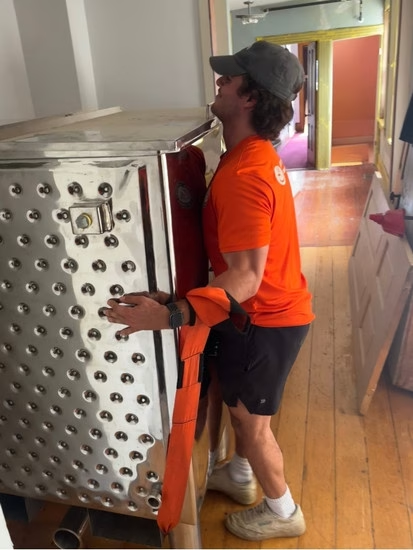
- Specialty handling fees cover oversized or complex items that require extra care, equipment, or crew coordination. Common examples include pianos, gun safes, and heavy exercise equipment. At College Muscle Movers, specialty handling fees typically range from $25 to $150 per item depending on the complexity involved.
- Optional add-on services can also add to your total. Packing and unpacking, furniture disassembly and reassembly, furniture disposal, and moving supplies like boxes, bubble wrap, and tape are all available but not included in the base rate. If you want any of these services, let your moving coordinator know when you request a quote so they can be factored in from the start.
The bottom line: moving costs add up faster than most people expect. Knowing what’s on the menu ahead of time is the best way to avoid surprises on moving day.
Does the Time of Year Affect How Much Moving Costs in Minnesota?
Yes — and in Minnesota, the seasonal difference is meaningful.
Summer is peak moving season. Demand is high, crews are busy, and rates reflect that. If you have flexibility in your timeline, moving in the fall, winter, or early spring will generally cost you less. At College Muscle Movers, our rates are lower in the winter months, which makes off-peak moving a genuinely smart option for budget-conscious customers.
That said, winter moves in Minnesota come with their own logistics — cold temperatures, snow, ice, and the need to protect both your belongings and your floors during the process. It’s entirely manageable with the right crew, but worth planning for. If you’re curious about what a winter move actually involves, we cover it in detail in our guide to moving during a Minnesota winter.
Why Licensed and Insured Movers Cost More – and Why It’s Worth It
When you’re comparing quotes, you may find significant price differences between companies. In some cases, the lower price reflects an unlicensed or underinsured mover — and that comes with real risk.
Professional, licensed moving companies in Minnesota are required to carry general liability insurance, cargo insurance, and workers’ compensation coverage. They hold both a USDOT license number and a MNDOT license number, which means they’re registered with federal and state transportation authorities and held to regulatory standards.
What does that mean for you? If something gets damaged during your move, a licensed and insured company has the coverage to make it right. If a mover is injured on the job, workers’ comp means you’re not exposed to liability. If a company is operating without a license, you have very little recourse if something goes wrong.
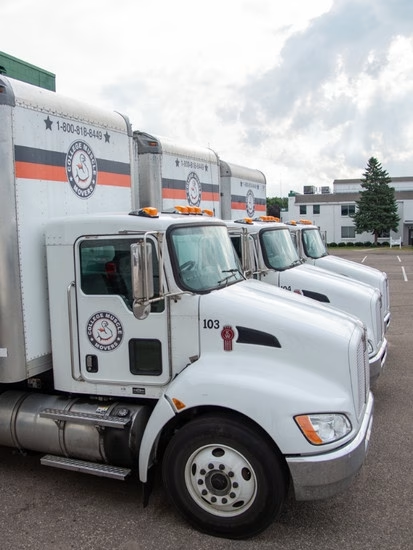
College Muscle Movers is fully licensed, bonded, and insured in Minnesota. We hold both a USDOT and MNDOT license number. It costs a little more to operate this way — and it’s worth every penny.
Tips to Keep Your Moving Costs Down
A few things you can do to keep your final bill on the lower end of the range:
- Declutter before moving day. Every item you donate, sell, or toss is one fewer item to load, move, and unload. It’s the single most effective way to reduce your move time.
- Have boxes packed and labeled before your crew arrives. Moving loose, unpacked items takes significantly longer than moving sealed, labeled boxes. If you’re handling packing yourself, aim to be fully packed before moving day.
- Be upfront about specialty items when you request a quote. Pianos, gun safes, and heavy equipment affect crew size and planning. Flagging them early means no surprises on the day.
- Consider moving in the off-season. If your timeline is flexible, a fall or winter move will cost less than a summer one.
- Ask about Muscle Boxes. College Muscle Movers includes 15 free reusable plastic moving bins with every move — a four-week rental at no charge. Using them instead of buying cardboard boxes saves money and reduces waste.
For more ways to cut costs on your move, check out our full guide on how to save money when moving.
How Much Should You Tip Your Movers?
Tips are always appreciated but never required. At College Muscle Movers, our goal is to make you feel like your money was well spent — full stop. If your crew worked hard, took care of your belongings, and gave you a smooth moving day, showing them some appreciation with a tip is a great way to recognize that. But you should never feel pressured to tip beyond your means.
As a general guideline, tips typically range from $5 to $10 per mover per hour. On a 4-hour move with a 3-person crew, that works out to roughly $60 to $120 total — though tipping more or less than that based on your experience is completely appropriate.
Get an Accurate Quote for Your Twin Cities Move
The ranges in this post are a useful starting point, but your actual cost depends on the specific details of your move — and those details matter. The best way to know what your move will cost is to get a personalized quote from a moving company that takes the time to understand your situation.
At College Muscle Movers, we build every estimate around the specifics of your job — your items, your locations, your logistics — so you get an accurate picture upfront rather than a number that shifts on moving day.
Request a free quote from College Muscle Movers and we’ll put together an estimate tailored to your move.
About the Author

Morgan Alexander
Moving Specialist