
Voted Minnesota's
#1 Moving Company

How to Move Into a New House Before You’ve Sold the Old One
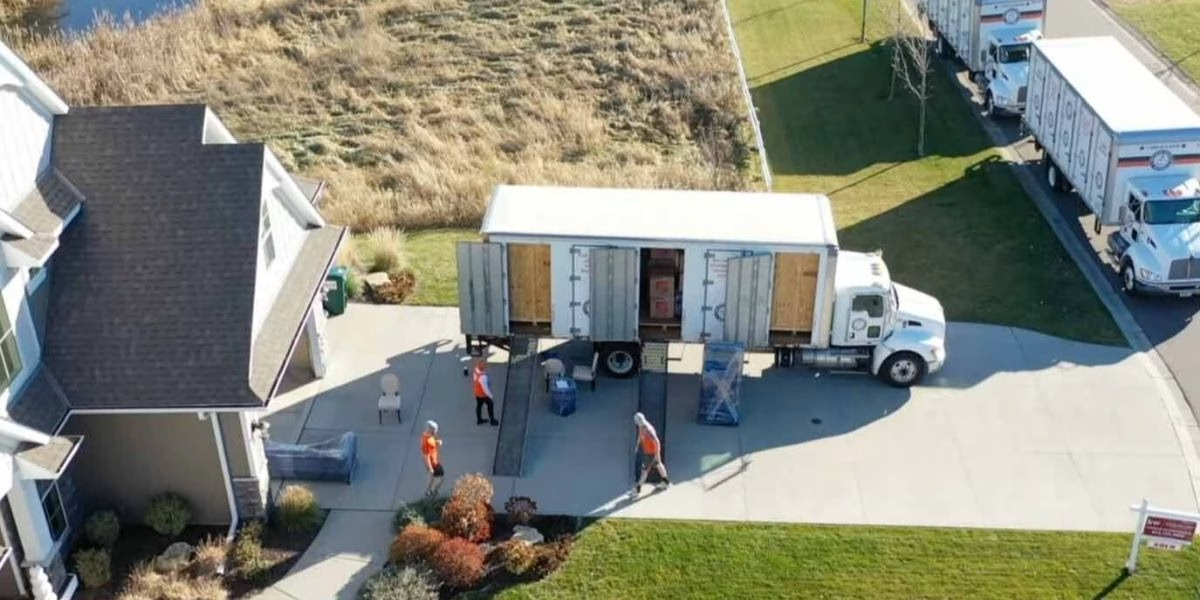
A gap between your move-out date and your move-in date is one of the most common headaches in buying and selling a home around the same time. Sometimes it’s a week or two between closings. Sometimes your new home is still being built. Sometimes it needs new floors or a renovation finished before you can actually live in it. The tricky part usually isn’t the closing paperwork.
The hardest part about moving into a new home before you sell the old one is figuring out what to do with all your belongings during the gap in between.
At College Muscle Movers, we built our moving and storage service specifically to solve this problem, and after handling hundreds of these transitions, we’ve learned exactly where a normal self-storage plan falls short.
The Short Version
Moving into a new home before you sell your old one comes down to one practical question: where do your belongings go in the meantime? A few things to know:
- A standard self-storage unit means paying for two extra load-and-unload cycles: once into the unit, once back out. That adds real time and cost on both ends.
- A moving and storage service that keeps your items in the mover’s own warehouse eliminates one of those cycles entirely. Your things get loaded once and delivered once.
- Storage built around individual, modular units and billed by the day means you’re not paying for more space or time than you actually need.
- You can usually still access your things during the gap, though advance notice is needed since your specific storage unit has to be physically located and pulled.
- You don’t need to fill a whole storage unit. A modular setup can handle a few pieces of furniture just as easily as an entire household.
- Storage length varies by situation, from overnight to several months, and pricing should reflect that instead of a flat rate regardless of how long you actually need it.
The sections below go through each of these in more detail.
Why Moving Into a New Home Before You Sell Creates a Storage Gap
Having a gap between your move-out and move-in isn’t an uncommon situation. There can be many good reasons behind it.
Sometimes it’s a straightforward timing mismatch: your home sells and closes, but your new home doesn’t close for another week or two.
Sometimes you’re building a new home, and construction simply isn’t finished when your current home sells.
Sometimes the closing isn’t the issue at all. Your new home needs new floors, a renovation, or repairs finished before it’s actually livable, even though you already own it.
This shows up constantly in our own scheduling records. Closing dates a week or two apart, a new build that isn’t quite ready, or someone waiting on flooring or renovation work before they can move in are the most common reasons customers use our storage service.
The Real Problem: What to Do With Your Belongings in the Gap
Once your timeline is set, you’re left with a practical question. Where does everything go for however many days, weeks, or months separate your move-out from your move-in?
For most people, the answer is renting a self-storage unit. It’s the option most people default to because it’s familiar, and it works. But it’s not the most efficient or affordable way to handle a temporary gap, especially a short one.
Why a Normal Self-Storage Unit Means Paying for an Extra Move
A standard self-storage unit solves the space problem, but it introduces a hidden inefficiency: your belongings get handled twice as many times as they need to be.
Here’s what that actually looks like. Movers, or you, load a truck at your old home and drive to a storage facility. Everything gets unloaded into the unit. Weeks or months later, when your new home is ready, someone has to go back, load everything out of that same unit, and drive it to the new address for a second unload. That’s two full loading cycles and two full unloading cycles for one move, and you’re paying for all four. Plus, the additional handling is more time that something could get damaged.
How A Moving and Storage Service Skips the Extra Step
When your new home is ready, that same load goes out for delivery. No second facility, no second load-out, no separate storage company to coordinate with. You’re paying for one load and one delivery instead of two of each.
At College Muscle Movers, this is exactly why we built our own moving and storage service rather than partnering with a separate storage facility. Cutting out that redundant handling is what lets us offer storage at a rate that’s typically lower than a standard 24/7 self-storage facility, even with a secure, climate-controlled warehouse behind it.
How Our Vault Storage Actually Works
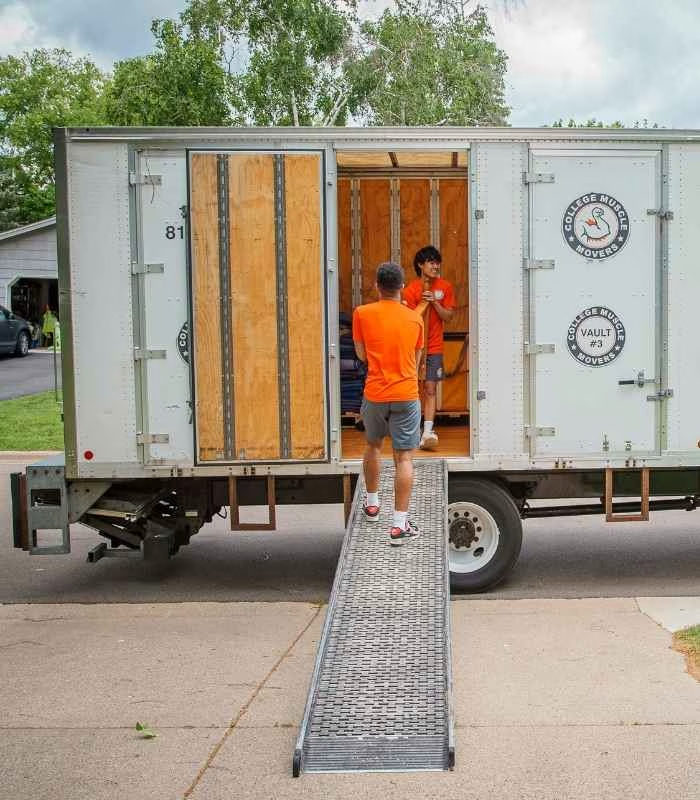
Our storage system is built around individual wooden vaults, each 7 feet by 5 feet by 7 feet, rather than one large shared unit. Vaults are loaded directly from a specialized vault truck, which holds up to five vaults at once, each accessible through its own door and ramp on the side of the truck.
As your belongings are loaded, your crew lead records the contents of each vault before it’s clamped shut. Once one vault is full, the crew opens the next door, extends the ramp, and keeps loading until everything is packed. Your vaults are then stored in our secure, climate-controlled warehouse in the Midway neighborhood, between Minneapolis and St. Paul.
Because storage is organized vault by vault rather than as one large unit, it’s genuinely modular. You’re billed for the space you actually use rather than a fixed unit size that may be bigger than what your belongings require.
Watch this video for an inside look at how our storage vault system works.
Accessing Your Things in Storage
A common concern with this kind of storage is losing access to your belongings until the final delivery. In practice, that’s not how it works, though it does take a bit of advance planning.
If you need something out of storage before your final delivery date, whether it’s a single box or a piece of furniture, the standard process is to call ahead, typically with 24 hours notice, and request a time. That notice matters because your specific vault needs to be located and pulled from the warehouse with a forklift. It isn’t sitting at ground level the way a drive-up storage unit would be. Once it’s pulled and made available at your scheduled time, you can get what you need.
What Vault Storage Actually Costs
Storage pricing is straightforward, and it’s built around the vault rather than a flat monthly rate:
Storage (15-day minimum): $30 per 7′ x 5′ x 7′ vault covers the first 15 days, plus $2 per day after that
Racking for oversized items: $10 per item covers the first 15 days, plus $0.66 per day after that
Overnight storage is billed separately as a flat $150 fee, for gaps of a single day between move-out and move-in
Because pricing is per vault and per day, storing a one-bedroom apartment’s worth of belongings costs meaningfully less than storing a full house, and a two-week gap costs a fraction of a typical monthly self-storage rate rather than getting rounded up to a full month regardless of how long you actually need it.
In our own experience, this matches how people actually use the service. The typical storage length was under two weeks, and roughly two-thirds wrapped up within a month. That lines up with a service built as a bridge, not a long-term storage solution.
For a sense of what a standalone local move costs before adding storage into the mix, see our guide to moving costs in the Twin Cities.

FAQs About How to Move Into a New Home Before You’ve Sold the Old One
Do I need a storage unit if I'm moving before my house sells?
How much does temporary storage cost between moves?
Vault storage is billed per unit and per day rather than a flat monthly rate: $30 per vault plus $2 a day after a 15-day minimum, or a flat $150 for a single overnight gap. Since you’re only billed for the space and time you actually use, a short gap costs a fraction of a typical monthly self-storage rate.
Can I access my belongings while they're in storage?
Usually, yes, with advance notice. A typical process is calling ahead, often 24 hours, to schedule a time, since your specific vault needs to be pulled from the warehouse with a forklift rather than accessed at ground level like a drive-up unit.
Do I have to store my entire household, or can I just store a few items?
Most flexible moving and storage services can scale down to a handful of items or even a single piece of furniture, since storage is organized by individual unit rather than requiring you to rent one large space regardless of how much you’re actually storing.
How long can I store my things between moves?
As long as you need, from overnight to several months. What changes is the pricing structure: short gaps should be billed by the day, not forced into a monthly rate that doesn’t match how long you actually need the space.
How do I help my pet settle in on moving day?
Set up one room first, with food, water, bedding, and something familiar-smelling, so your pet has a landing spot right away. Keep a close watch on doors and windows for the first day or two while they’re still learning the new space.
One Move, Not Two
Moving into a new home before you’ve sold the old one starts as a timing problem, but the cost and hassle usually show up on the moving side of things. The difference between a standard storage unit and a moving and storage service built for this exact gap comes down to how many times your belongings get handled, and each of those handoffs costs time and money.
Ready to bridge the gap between your move-out and move-in dates? Get a free quote from College Muscle Movers, and let us know your timeline, even if it’s still a little uncertain. We’ll help you figure out the right length of storage for your situation.
About the Author

Morgan Alexander
Moving Specialist