
Voted Minnesota's
#1 Moving Company

Moving to the Twin Cities: A Local Relocation Guide
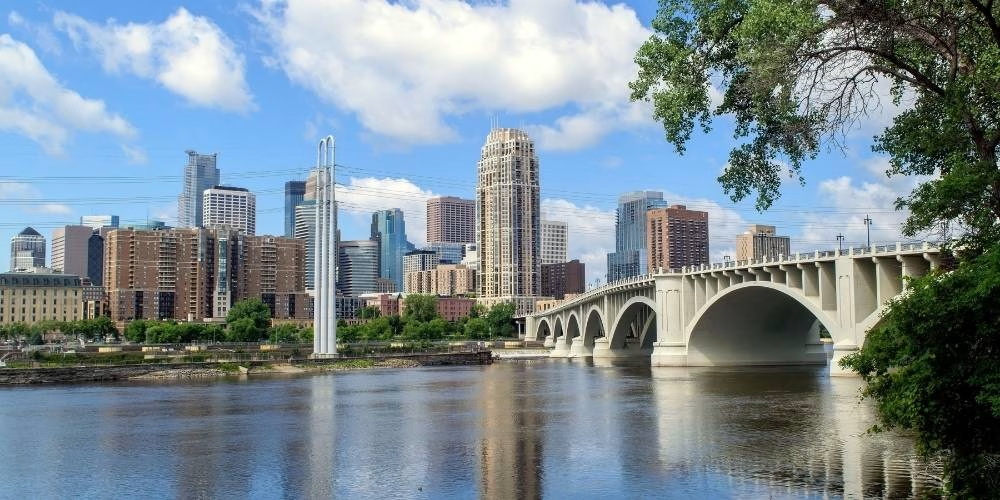
Are you moving to the Twin Cities? We understand moving to a new place can be challenging, but Minneapolis, St. Paul, and the surrounding metro are truly great places to live.
Moving to the Twin Cities means choosing from more than 180 communities across seven counties, and no two of them feel the same. Minneapolis and St. Paul get the name, but the region is home to about 3.3 million people, and where you land shapes your commute, your winters, your weekends, and your sense of the place.
College Muscle Movers has been serving the Twin Cities since 2008. We are based in St. Paul, our team members come from all corners of the metro, and this is our home. We love the people, the arts and culture, the schools and universities, the food, the seasons, and the lakes, so this guide shares what we would tell a friend who was relocating to the Twin Cities.
Moving to the Twin Cities: The Short Version
Choose your area first, then plan for winter. Those two decisions shape most of what comes after.
- The region: The Twin Cities is a seven-county metro with about 3.3 million residents, and Minneapolis and St. Paul are only the center of it.
- The two cities: Minneapolis has the larger downtown and the lakes. St. Paul tends to feel more historic and residential.
- Who moves here: Most of the out-of-state moves we help with come from nearby states like Wisconsin, Illinois, Iowa, and the Dakotas. We also move many people from Duluth, Rochester, St. Cloud, and Mankato, and some from the rest of the country.
- Your first 60 days: New residents have 60 days to apply for a Minnesota driver’s license and to register their vehicles.
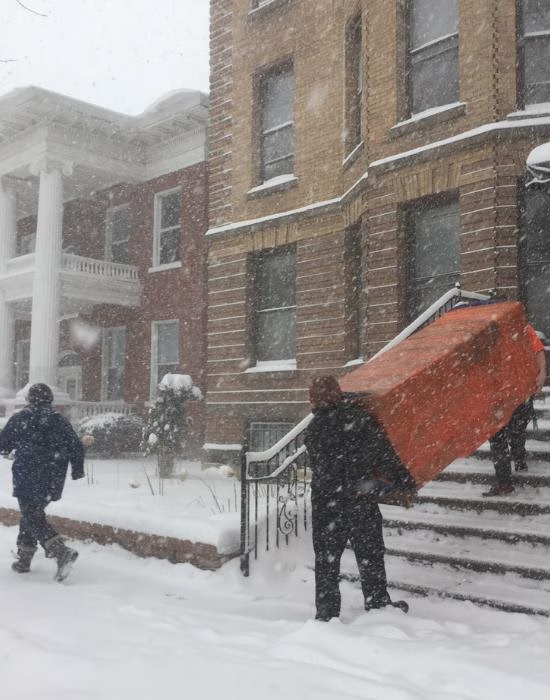
- The weather: January highs average in the mid-20s, and the Twin Cities typically gets about 50 inches of snow a year. Learn the snow emergency parking rules early.
Get to Know the Twin Cities Geographically
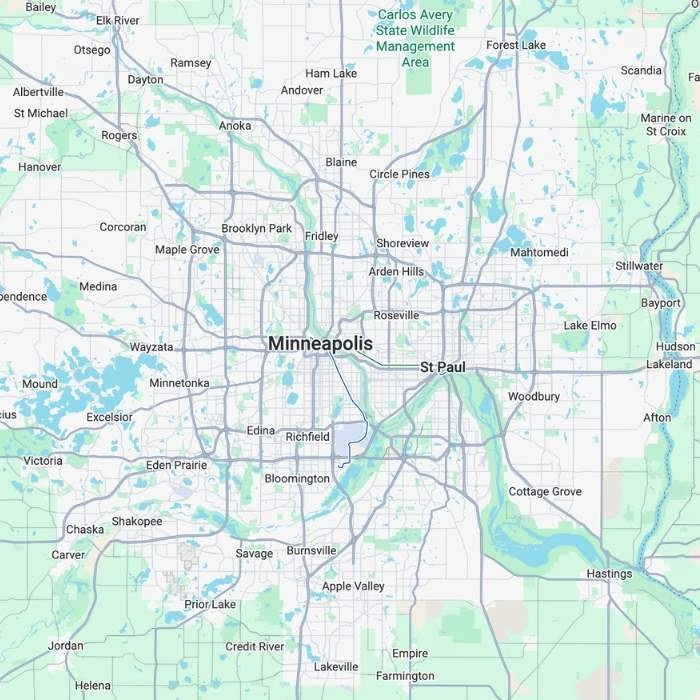
The Twin Cities region covers Anoka, Carver, Dakota, Hennepin, Ramsey, Scott, and Washington counties, and the Metropolitan Council counts more than 180 communities in that area. Minneapolis, the state’s largest city, is in Hennepin County. St. Paul, the state capital, is the seat of Ramsey County.
Think of the region in rings. The two downtowns anchor the center, inner-ring suburbs like Edina, St. Louis Park, Richfield, and Roseville sit just beyond the city limits, and suburbs fan out to the west, south, east, and north. Interstates 94, 35W, 35E, and 494 connect them, and Metro Transit’s light rail adds two lines: the Blue Line runs from Target Field in downtown Minneapolis past the airport to Mall of America, and the Green Line runs from Target Field through the University of Minnesota to Union Depot in downtown St. Paul.
Minneapolis vs. St. Paul: How Do the Twin Cities Differ?
The downtowns are about ten miles apart, and the cities have different personalities. Minneapolis has the bigger skyline, the Chain of Lakes, the riverfront, and most of the region’s major-league venues. St. Paul has the state capitol, the Cathedral, historic Summit Avenue, and a more neighborhood-by-neighborhood, residential feel.
Locals have strong opinions about both, and plenty of people live in one city and work, play, or see friends in the other every week. Many newcomers find the easiest way to choose is to spend a weekend in each before signing a lease or making an offer.
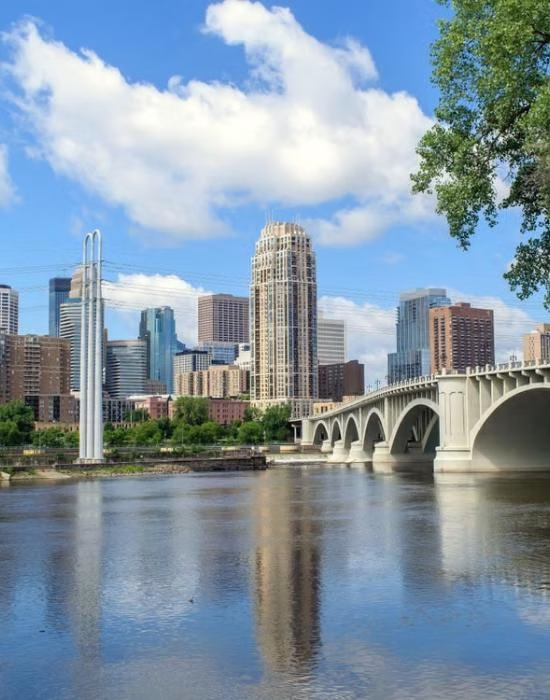
Where to Live in the Twin Cities: Neighborhoods and Suburbs
Minneapolis neighborhoods. Downtown and the North Loop offer converted warehouses, condos, and riverfront walks near Target Field. Uptown and the lakes neighborhoods, including Linden Hills near Lake Harriet, are built around Bde Maka Ska, Lake of the Isles, and Lake Harriet. Northeast Minneapolis is known for its arts district, breweries, and older homes, while Longfellow, Powderhorn, and the neighborhoods along Minnehaha Creek give you a mix of bungalows, parks, and a lot of independent restaurants.
St. Paul neighborhoods. Summit Hill and Cathedral Hill are famous for Summit Avenue’s historic homes. Macalester-Groveland and Highland Park are tree-lined and close to the Mississippi River, Macalester College, and the University of St. Thomas. Lowertown is a historic warehouse district with a farmers market, Union Depot, and CHS Field, and the University Avenue corridor through Midway and Frogtown follows the Green Line and is packed with restaurants. Como, home to Como Park, is a favorite for people who want green space inside the city.
Inner-ring suburbs. Edina, St. Louis Park, Richfield, Roseville, Golden Valley, and Hopkins offer quick access to both downtowns and established neighborhoods.
West of the cities. Minnetonka, Wayzata, and Excelsior sit near Lake Minnetonka, while Plymouth, Maple Grove, and Eden Prairie are larger suburbs with plenty of parks and trails. Chanhassen is home to Paisley Park.
South of the cities. Bloomington is home to Mall of America and sits next to the airport. Burnsville, Eagan, Apple Valley, and Lakeville are popular choices for people who want more space and quick access to the airport and Mall of America.
East of the cities. Woodbury, Maplewood, and Oakdale are major east metro suburbs, and Stillwater on the St. Croix River gives you a historic small-town downtown within easy reach of St. Paul.
North of the cities. Shoreview, Blaine, Coon Rapids, Fridley, and Brooklyn Park offer quick highway access, plenty of lakes and parks, and a range of neighborhoods.
We move people into all of these areas, so if you are comparing two or three, ask your mover and your agent about commute times, parking, and street layouts in each.
Relocating to the Twin Cities From Out of State or From Greater Minnesota
Where you are coming from changes what you should plan for.
From a nearby state. Most of our out-of-state relocations to the Twin Cities come from Wisconsin, Illinois, Iowa, and the Dakotas. These are usually a one-day drive, so the winters will feel familiar, and the biggest adjustments are the metro’s size, traffic, and city-specific parking rules. If you are coming from farther than a day’s drive, our long distance moving service can handle the whole move.
From another part of Minnesota. We also help people moving from Duluth, Rochester, St. Cloud, and Mankato. You already know how to handle winter, but life in the metro comes with more traffic, more neighborhoods to choose from, and snow emergency parking rules that differ from city to city.
From elsewhere in the U.S. A smaller share of the people we help come from other parts of the country. If you are used to a milder climate, give winter real attention before you arrive: coats, boots, and a plan for the first snowfall are worth sorting out early.
What Are Twin Cities Winters Really Like?
Cold, snowy, and more livable than newcomers expect. January highs average about 24 degrees and lows about 9, while July highs reach the low 80s, according to NOAA climate normals. The first measurable snow typically arrives in early November, and the Twin Cities averages roughly 50 inches of snow a year, with December the snowiest month.
Daylight is the part newcomers often notice most. December has the shortest days of the year, with less than nine hours of daylight around the solstice. Locals cope by getting outside anyway: skating, skiing, and snowshoeing are part of the culture, and our crews keep moving through cold and snow every winter.
From my perspective, it seems that in recent years the winters are becoming milder than in the past. Warm weather now often lasts into October and November. That said, each winter is different and the Twin Cities still boasts plenty of great winter outdoor recreation opportunities.
Professional Sports in the Twin Cities
Sports are a big part of Twin Cities life, and every major team is easy to reach from either downtown.
- Minnesota Vikings (NFL): U.S. Bank Stadium, Minneapolis.
- Minnesota Twins (MLB): Target Field, Minneapolis.
- Minnesota Timberwolves (NBA) and Minnesota Lynx (WNBA): Target Center, Minneapolis. The Lynx have won four WNBA titles.
- Minnesota Wild (NHL) and Minnesota Frost (PWHL): Grand Casino Arena in downtown St. Paul, formerly Xcel Energy Center. The Frost have won the Walter Cup championship twice.
- Minnesota United FC (MLS): Allianz Field, St. Paul.
- Minnesota Aurora FC (USL W League): TCO Stadium, Eagan.
The University of Minnesota Golden Gophers add college sports to the calendar, and hockey fans will find a strong local culture around the sport at every level.
Ask any Minnesota sports fan and they will tell you about the long drought we’ve suffered when it comes to our pro sports teams bringing home a championship. Only the Lynx have done their part, building a dynasty that we’re proud of.
The Twin Cities Music Scene
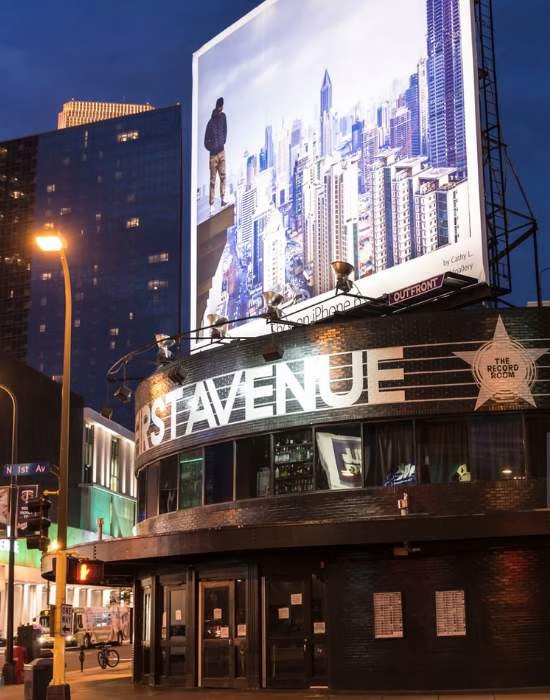
The Twin Cities punches above its weight in music. First Avenue in downtown Minneapolis has been the center of the scene for more than 50 years, and the Turf Club and Palace Theatre in St. Paul are part of the same family of venues, since First Avenue owns the Turf Club and co-operates the Palace. Prince’s legacy runs through the region, and you can tour Paisley Park, his home and studio, in Chanhassen.
For classical music, the Minnesota Orchestra performs at Orchestra Hall in downtown Minneapolis. In summer, free concerts pop up in city parks, and the Twin Cities Jazz Festival fills Mears Park in St. Paul each June.
The Twin Cities Food Scene
Food here is more diverse than most people expect. The Jucy Lucy, a cheese-stuffed burger, is the signature local dish, and Matt’s Bar in Minneapolis is the place to try it. Hot dish and walleye are Minnesota staples.
Beyond that, the metro’s immigrant communities have built a remarkable food scene. Hmongtown Marketplace on Como Avenue and Hmong Village in St. Paul sell Southeast Asian produce and meals, Midtown Global Market in Minneapolis brings dozens of cuisines under one roof, and Nicollet Avenue’s Eat Street runs about ten blocks of Vietnamese, Mexican, Jamaican, and other restaurants. On the high end, the Indigenous restaurant Owamni has drawn national attention.

Outdoor Recreation in the Twin Cities
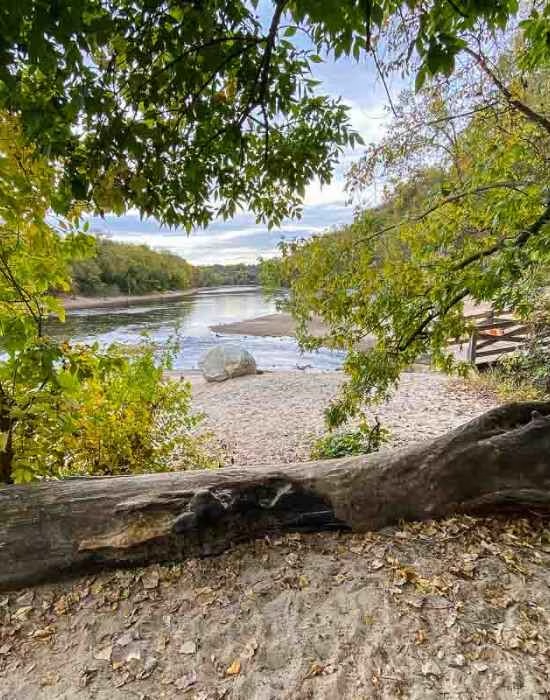
The Twin Cities is built around water and green space. The Grand Rounds Scenic Byway loops around Minneapolis with about 50 miles of trails that connect the Chain of Lakes, Minnehaha Creek, the Mississippi River, and Theodore Wirth Park, and it was named a National Scenic Byway in 1998. The Chain of Lakes, Lake Nokomis, and Lake Hiawatha are popular for swimming, paddling, and biking in summer.
Minnehaha Falls, a 53-foot waterfall in Minneapolis, is free to visit. Theodore Wirth Regional Park has hiking, mountain biking, and winter skiing, and the City of Lakes Loppet cross-country ski festival takes over the first weekend in February. The Twin Cities Marathon runs the first Sunday in October.
Our Best Tips for Enjoying the Twin Cities
After years of living and working here, these are the five things we tell newcomers to do first.
- Embrace winter recreation. Ice skating and cross-country skiing turn the cold months into a season to look forward to. Theodore Wirth Regional Park has groomed ski and snowshoe trails, and the City of Lakes Loppet takes over the first weekend in February.
- Enjoy the lakes. The Grand Rounds connects 14 natural lakes inside Minneapolis, and summer is made for boating, fishing, swimming, paddleboarding, or just sunbathing on the shore.
- Go to a concert at First Avenue. The former bus depot in downtown Minneapolis has hosted live music since 1970, and a show there is a Twin Cities rite of passage.
- Try different cuisines. The metro’s diverse restaurants are one of its best features, so work your way through Eat Street, Midtown Global Market, and Hmongtown Marketplace.
- Hike the Minnehaha trails. Minnehaha Falls and the paths along Minnehaha Creek make an easy first outing in any season.
Moving to the Twin Cities With College Muscle Movers
We have moved people into and around the Twin Cities for years, and our local moving services and long distance moving crews know the buildings, the streets, and the winters. If you are planning a move, request a quote or call (651) 917-4108.
FAQs About Moving to the Twin Cities
What is it like moving to the Twin Cities?
The Twin Cities combines a big-city arts, sports, and food scene with lakes, parks, and a lot of neighborhood character. Winters are cold and snowy, summers are warm, and the region is easy to navigate once you choose your area.
What is the difference between Minneapolis and St. Paul?
Minneapolis has the larger downtown, the Chain of Lakes, and most major-league venues. St. Paul is the state capital and tends to feel more historic and residential, with Summit Avenue, Lowertown, and a more neighborhood-by-neighborhood character.
How long do I have to get a Minnesota driver’s license after moving?
New residents have 60 days to apply for a Minnesota driver’s license, and 60 days to register most vehicles.
What are snow emergencies in the Twin Cities?
When heavy snow falls, Minneapolis and St. Paul declare snow emergencies with temporary parking restrictions so plows can clear the streets, and parking rules begin at 9 p.m. on the day one is declared. Cars parked in violation can be ticketed and towed, so learn your city’s rules.
Where do most people relocating to the Twin Cities move from?
For the out-of-state relocations we help with, the largest share comes from nearby states like Wisconsin, Illinois, Iowa, and the Dakotas. We also move many people from other parts of Minnesota, like Duluth, Rochester, St. Cloud, and Mankato, and some from across the country.
What is the best time of year to move to the Twin Cities?
Many people prefer late spring through early fall for the weather, but we move year-round, and winter moves are very doable with a little preparation.
How long does a holiday move take?
A typical load and unload move had a median of 5 hours in the winter months, the same as in summer. Snow, ice, and early darkness can add time, so plan to start in the morning.
How should I handle holiday decorations when I move?
Decide early which decorations are coming with you, which you will donate, and which you want to put up in the new home. Pack the ones you are keeping separately and label them so they do not slow down unpacking.
About the Author

Morgan Alexander
Moving Specialist