
Voted Minnesota's
#1 Moving Company

What To Do With Unwanted Furniture In The Twin Cities
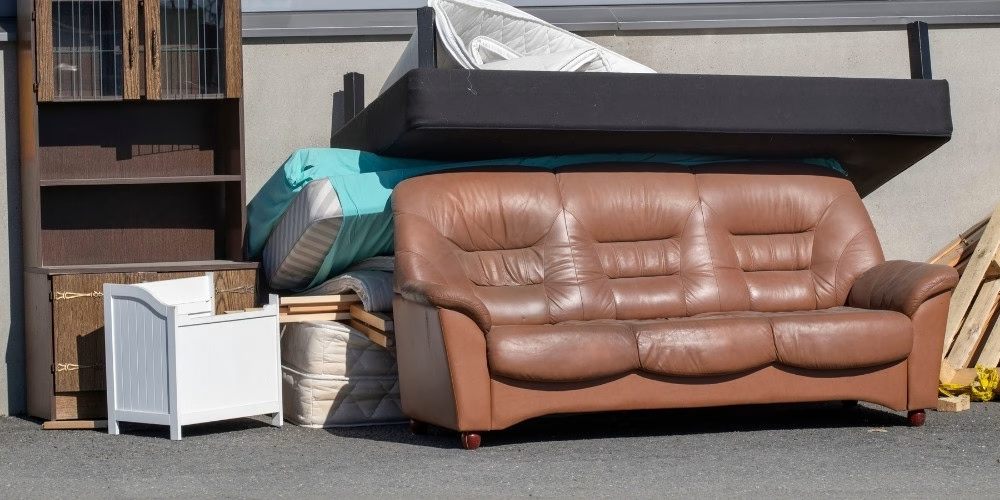
Figuring out what to do with unwanted furniture usually comes down to three options: donate it, recycle it, or have it hauled away. Which one makes sense depends mostly on condition, and after that, on which Twin Cities program or organization actually fits what you’re getting rid of.
This guide walks through how to decide, the real local donation and recycling options in Minneapolis and St. Paul, the actual city bulk pickup rules, when hiring it out makes sense, and what our own furniture disposal jobs tell us about what people most often get rid of.
What to Do With Unwanted Furniture: The Short Version
- Start with condition: clean, functional furniture can usually be donated, while damaged or worn pieces are better suited for recycling or disposal.
- Twin Cities Habitat ReStore and Bridging both offer free or low-cost pickup for donations across the metro.
- Minneapolis and St. Paul both offer bulk item pickup, but the rules and limits are different in each city.
- Tables, couches, chairs, mattresses, and dressers are the items we haul away most often.
- Professional disposal is especially useful if you’re already moving, or if your building or city doesn’t include bulk item pickup in your regular garbage service.
What to Do With Unwanted Furniture: Start With Condition
Before deciding where a piece of furniture goes, take an honest look at its condition. This one decision drives almost everything else.
Good candidates for donation:
- Clean, free of stains, odors, or pet hair
- Structurally sound, no broken legs, frames, or major sagging
- Usable as-is, without repair
Better suited for recycling or disposal:
- Torn upholstery, significant water damage, or mold
- Broken frames or non-functional mechanisms
- Heavily worn particleboard furniture that’s reached the end of its useful life
If you’re on the fence, donation centers will usually tell you no themselves rather than accept something unusable, so it’s worth trying a donation first if a piece is in reasonably good shape.

Donating Furniture In The Twin Cities
Two organizations handle the bulk of furniture donation in the metro, and both make it fairly easy.
Twin Cities Habitat ReStore has three locations, in Minneapolis, Brooklyn Park, and New Brighton, and accepts furniture, appliances, and building materials. They offer a free donation pickup anywhere in the seven-county metro area, or you can drop items off directly Tuesday through Saturday. Revenue supports Habitat’s affordable housing work locally.
Bridging, headquartered in Bloomington with a second location in Roseville, is the largest furniture bank in North America. They provide furniture and household goods to people transitioning out of homelessness, and have furnished more than 75,000 homes since 1987. Bridging’s pickup service covers most of the seven-county metro for a flat $160 fee, or items can be dropped off at either location.
Both organizations have specific guidelines on what they can accept, so it’s worth checking their donation lists before you count on a pickup.
Recycling Furniture and its Materials
Not everything can be donated, but a lot of it can still be kept out of the landfill. Metal furniture frames, wood, and some upholstered pieces can often be broken down and recycled by material rather than thrown away whole.
Mattresses are a special case, and the two cities handle them differently. Minneapolis includes mattresses in large item collection, but only on your recycling week, not on a regular garbage day. St. Paul pulls mattresses and metal bed frames out of standard bulky item collection entirely, they need to be scheduled through Second Chance Recycling instead, a free service that doesn’t count against your annual bulky item total. Mattress recycling programs like this break the item down into steel, foam, and fabric components that can each be processed separately.
Curbside and Bulk Pickup Rules in Minneapolis and St. Paul
If donation and recycling aren’t the right fit, both cities offer bulk item pickup as part of regular trash service, but the rules are different enough that it’s worth knowing which one applies to you.
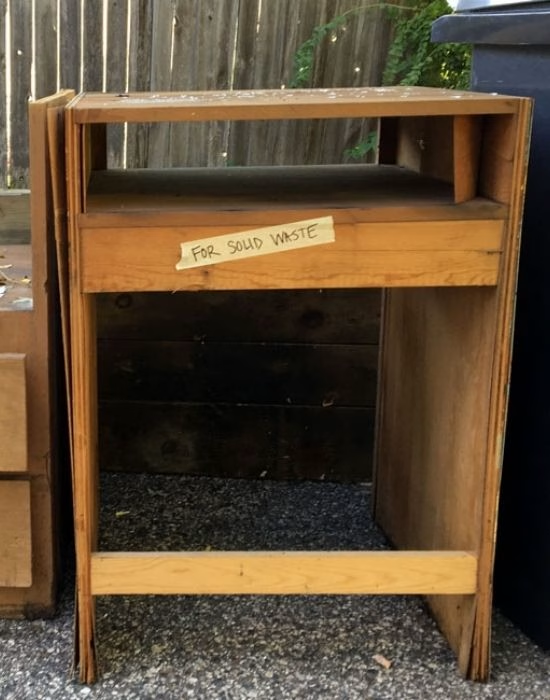
In Minneapolis, City garbage customers can set out up to two large items per week on their regular collection day, at no extra charge and with no scheduling required. Items need to be at the curb or alley by 6 a.m. with a note attached reading “For Solid Waste.” Some items, like appliances, electronics, and mattresses, are only picked up on your recycling week rather than every week. Full details are on the City of Minneapolis large items page.
In St. Paul, the rules work differently. Residential properties get 12 bulky item pickups per garbage cart per calendar year included in regular service, with additional items costing $30 each. As mentioned above, mattresses and bed frames go through Second Chance Recycling rather than standard bulky item collection. The City of Saint Paul’s bulky item collection page has the full list of what qualifies.
Neither city’s crew will enter your home, garage, or backyard to retrieve an item, everything has to be at the curb or alley line for pickup.
When Hiring a Professional Furniture Disposal Company Makes Sense
Donation and city pickup cover most situations well, and they’re often free or close to it, so they’re worth trying first. Professional furniture disposal is a good fit in a few specific situations:
- You’re already moving. If a crew is already at your home loading a truck, it’s far easier to have unwanted items hauled away at the same time than to coordinate a separate donation pickup or wait for your next bulk collection date.
- You don’t have bulk pickup as part of your regular garbage service. Not everyone does. Many apartment and condo buildings, some HOAs, and areas outside Minneapolis and St. Paul city limits don’t include large item pickup the way these two cities do.
- You want the item properly recycled or disposed of without doing the legwork yourself. Sorting out what’s recyclable, driving it somewhere, or hauling it to the curb yourself takes real time and effort, especially for something heavy.
At CMM, our furniture disposal service exists for exactly these situations. We’ll take unwanted items during a move, or on their own, and make sure they’re recycled or disposed of responsibly rather than just dumped.
What Our Own Furniture Disposal Jobs Show
We looked back through more hundreds of completed furniture disposal jobs to see what people in the Twin Cities actually get rid of most. Tables, couches, and chairs topped the list, followed closely by mattresses, dressers, TVs, and desks. Bed frames, box springs, and sectionals showed up regularly too, a reminder that most of what people need hauled away is exactly the kind of bulky, awkward furniture that’s hardest to move on your own.
How Much Furniture Disposal Costs
Here’s what our furniture disposal service costs, item by item:
- Standard furniture (couches, chairs, tables, desks): $60 for the first item, $40 per additional item
- Mattress or box spring: $70 per item
- Appliances: $85 per item
- Treadmill: $150 per item
- Flat panel TV or monitor: $75 per item
- CRT TV or monitor up to 32″: $100 per item
- CRT TV or monitor over 32″: $150 per item
- Rear projection, DLP, or console TV: $200 per item
- Scanners, laptops, DVD players: $30 per item
These fees reflect what it actually costs to responsibly recycle or dispose of each item, which is why electronics and appliances cost more than a standard piece of furniture. It’s the real cost of doing this properly, not a flat markup.
Furniture disposal works best as an add-on to a move, since we’re already there and can take unwanted items straight from your old place instead of loading them onto the truck. If you’re not moving but still want items hauled away, our standard hourly rate and travel fee apply in addition to the disposal fees above.
A Mover’s Perspective on Furniture Removal
After years of hauling furniture out of Twin Cities homes, the pattern that stands out most is how often people hold onto something well past the point it should have gone. A stained mattress, a couch with a broken frame, a dresser with drawers that don’t close right, most people know it’s time before they call. My honest advice is not to wait until moving day to make that decision. Sorting out what stays and what goes a few weeks ahead gives you time to actually donate the good stuff instead of defaulting to disposal because you’re out of time.
FAQs About Furniture Disposal
What is the best way to get rid of unwanted furniture?
Start by checking the item’s condition. If it’s clean and functional, donation through an organization like Habitat ReStore or Bridging is a great option. If your city offers bulk pickup and the item qualifies, that works well too. Professional disposal makes the most sense when you’re already moving or don’t have bulk pickup available through your regular garbage service.
Does Minneapolis pickup furniture for free?
Yes. Minneapolis garbage customers can set out up to two large items per week on their regular collection day at no extra charge, with no scheduling required.
Does St. Paul pickup furniture for free?
Yes, up to a point. St. Paul includes 12 bulky item pickups per garbage cart per year as part of regular service, with additional items costing $30 each.
Can I donate a mattress in the Twin Cities?
Most donation centers don’t accept mattresses due to sanitary concerns. Mattress recycling programs, including Second Chance Recycling in St. Paul, are typically the better option.
How much does professional furniture disposal cost?
Standard furniture starts at $60 for the first item and $40 for each additional item, with mattresses, appliances, and electronics priced separately based on what it actually costs to recycle or dispose of them properly. See our furniture disposal page for full pricing.
Hire a Trusted Furniture Disposal Team
Getting ready for a move and need to clear out furniture first? Learn more about our furniture disposal service, or check out our moving checklist to start planning ahead.
About the Author

Morgan Alexander
Moving Specialist