
Voted Minnesota's
#1 Moving Company

What Movers Won’t Move: Items That Can’t Go on the Moving Truck
Knowing what movers won’t move before moving day saves you from having to scramble at the last minute. Most people don’t think about this until the truck is in the driveway and a crew member flags something that can’t be loaded. By that point, you may not have many options.
Professional moving companies are all regulated by the same set of restrictions that largely determine what items they won’t transport for safety, legal, or liability reasons. The specifics may vary slightly by company, but the categories are largely consistent across the industry. This guide walks through what those categories are, what you can do about them, and a few items that fall into a gray area worth knowing about before moving day.
What Items Movers Won’t Move: The Short Answer
Professional movers generally will not transport explosives, flammable fuels, hazardous materials, or firearms and ammunition. Mattresses typically require a protective bag. Plants, perishable food, and high-value items can often be moved but come with liability limitations. When in doubt, ask your moving company before moving day rather than finding out at the truck.
What Items Movers Won’t Move (For Safety Reasons)
Explosives and Flammable Fuels
This is the most universal restriction in the moving industry. Propane, gasoline, kerosene, and other flammable fuels cannot go on a moving truck. The reason is straightforward: these materials present a serious fire and explosion risk in an enclosed vehicle, particularly during a long drive in summer heat.
This means any gas-powered equipment you want moved, including lawnmowers, snowblowers, generators, and grills, must be completely emptied of fuel before moving day. Propane tanks must be disconnected and removed. For a local move, most people move propane tanks and small amounts of gas in their personal vehicle where they don’t pose a risk on a short drive across town.
What to do with fuel you can’t move: If you don’t want to travel with extra gas, the easiest thing to do is give it to a neighbor. For larger quantities, Hennepin County operates hazardous waste drop-off facilities in Bloomington and Brooklyn Park that accept flammable materials from residents across the metro, including Ramsey County. Facilities are open Tuesday through Saturday and accept hazardous household waste from residents of Hennepin, Anoka, Carver, Dakota, Ramsey, Scott, and Washington counties. See Hennepin County’s drop-off facility information for current hours and what’s accepted.
Firearms and Ammunition
Most professional moving companies will not transport firearms or ammunition on their trucks, and CMM is no exception. Firearms should be transported in your personal vehicle, unloaded and in a case, in accordance with applicable laws. In Minnesota, firearms must be unloaded during transport and stored in a case.
Hazardous and Dangerous Goods
Beyond fuel, professional movers generally won’t transport materials classified as hazardous or dangerous goods, including items that could damage the truck or other property during transport. If you’re unsure whether something qualifies, contact your moving company before moving day.

All gas-powered equipment must be emptied of gas before it can be loaded into a moving truck.
Items We Can Move With Some Limitations
These items aren’t universally prohibited, but most moving companies place conditions and liability limitations on them. Understanding these before moving day prevents surprises.
Mattresses and Box Springs
Many professional moving companies require mattresses and box springs to be in a protective bag before loading them onto the truck. This protects the mattress during transit and protects the truck from bed bugs, which can spread between homes through an unprotected mattress. At CMM, you can provide your own mattress bags or we can provide them for you, with the cost disclosed upfront.
Plants
Many moving companies will move houseplants, but with significant caveats. Plants can’t be easily secured in a moving truck. They shift during transit, soil spills, and there’s no way to control temperature or light exposure. Most movers, CMM included, won’t accept liability for any damage a plant suffers during the move. We will do our best to see that it makes it through transit in good condition, but we can’t guarantee it. If a plant is valuable or irreplaceable, your personal vehicle is the better option. For long-distance moves, some states also have restrictions on transporting certain plants across state lines due to agricultural regulations.
Perishable Food
Professional movers will generally move perishable food on local moves if it’s properly boxed, but won’t accept liability for spoilage. The honest recommendation that most experienced movers give: use up what you have in the days before your move and restock at your new home. It’s simpler and less stressful than worrying about temperature during transit. Non-perishable pantry items, like canned goods, dry goods, and sealed packages, move without issue. Pack them in small boxes since they get heavy quickly.
High-Value Items
This is the category where most people get caught off guard. Professional moving companies carry liability coverage for physical damage to items, but that coverage has limits and exclusions. Most standard moving contracts explicitly exclude liability for certain categories of high-value items, including:
- Coins, currency, deeds, notes, postage stamps, and valuable papers of any kind
- Jewelry, precious stones, and precious metals
- Items of extraordinary value
- Items requiring temperature control
Our best advice is to inform your moving company about any high-value items before moving day. If it’s possible to transport them in your personal vehicle, that’s what most companies will recommend. If it isn’t possible, a reputable mover will work with you to determine the best approach. The key is disclosing these items upfront so the crew can take appropriate care and you understand the liability limits that apply.
Pressboard and Particleboard Furniture
Most professional movers won’t accept liability for damage to furniture made of pressboard, particleboard, or similar pressed materials. These types of furniture are significantly more fragile than solid wood and can crack or break during normal handling. This is standard across the industry, not specific to any one company. The best way to ensure furniture like this moves safely is to disassemble it, which can be time-consuming. If you choose to move flat-pack or IKEA-style furniture as is, point it out to your crew during the walkthrough so they can take extra care. Some pieces may not survive a move regardless of how carefully they’re handled — it’s worth knowing this before moving day rather than after.

Plants can’t be properly secured in a moving truck and are better off traveling in your personal vehicle.
Items That Need to Be Disclosed Before Moving Day
These aren’t items professional movers refuse to move, but they require advance notice so the company can plan, bring appropriate equipment, and give you an accurate estimate. If you don’t disclse these items, there’s a chance your movers won’t have the necessary equipment to do it safely, plus it will add time and potentially extra handling fees to a move you are paying for hourly.
Safes: Gun safes and fireproof safes can be extremely heavy and may require special equipment or additional crew. Always disclose safes when submitting your inventory.
Pianos: Pianos require specialized handling and are almost always subject to an additional handling fee. The type of piano and the access situation at both addresses affects how the job is planned.
Pool tables: Disassembly and reassembly of pool tables is a specialized that the average mover is not prepared for skill. Disclose pool tables in your inventory and ask about handling upfront.
Exercise equipment: Treadmills, cable machines, and similar equipment can be bulky, heavy, and complicated to move safely. Disclose all exercise equipment in your inventory.
Large or valuable artwork: Make sure to let your movers know about significant artwork before you book so they can bring appropriate materials to protect and secure it properly. This is a planning issue as much as a liability one.
Professional moving companies are required to maintain a complete inventory of all items being moved as part of the service. This protects both the customer and the crew. Take the inventory step seriously since items not disclosed can affect your timeline, your cost estimate, and your coverage.
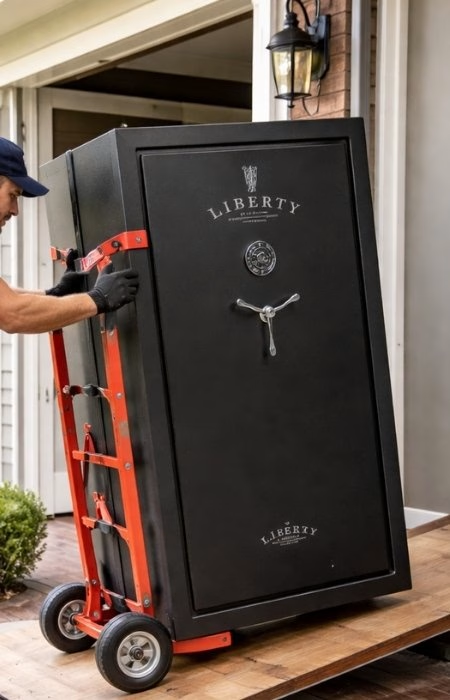
Specialty items like gun safes often require extra movers, straps, and dollies to move safely.
FAQs About What Items Movers Won’t Move
What are moving day prohibited items — and what happens if I forget to mention something?
Your crew will flag it on moving day. If an item genuinely can’t go on the truck for safety or policy reasons, it stays behind. If it’s a specialty item that wasn’t disclosed, it may still be possible to move it, but the timeline and estimate may be affected. The best approach is always to be thorough when submitting your inventory before moving day.
Can movers move a full refrigerator with food in it?
No — a refrigerator needs to be emptied before it can be moved. Refrigerators often have to be tipped at an angle to be carried out of a home, which would cause food and bottles to spill. Perishable food can be moved separately on a local move if it’s properly boxed, but movers can’t guarantee it won’t spoil during transit. The practical recommendation is to use up what you have before moving day and restock at your new home.
Do I need to empty my lawnmower before the movers arrive?
Yes. Gas-powered equipment must be completely emptied of fuel before any professional moving company will load it on a truck. Do this in the days before moving day rather than the morning of.
Can firearms go on a moving truck?
No. Firearms and ammunition cannot go on a professional moving truck, boxed or otherwise. They must be transported in your personal vehicle, unloaded and in a case, in accordance with applicable law.
What is a mattress bag and do I need one?
A mattress bag is a protective plastic enclosure that fully covers a mattress or box spring during a move. Most professional moving companies require them for all mattresses and box springs. If you don’t have one, your mover can typically provide one at a disclosed cost.
How do I know if something counts as a high-value item?
If it would be difficult or impossible to replace, or if its value isn’t reflected in its physical size or weight, treat it as a high-value item. Jewelry, documents, artwork, collectibles, and items with significant sentimental or monetary value all fall into this category. Inform your moving company before moving day and plan to transport these items yourself if possible.
Ready to book your move?
College Muscle Movers has been helping Twin Cities residents move for nearly 20 years. If you have questions about what can and can’t go on the truck, or want to talk through anything on your inventory before moving day, we’re happy to help.
Get a quote today and a service coordinator will be in touch shortly.
About the Author

Morgan Alexander
Moving Specialist