
Voted Minnesota's
#1 Moving Company

Tips for Moving in Summer in Minnesota: What to Know Before Moving Day
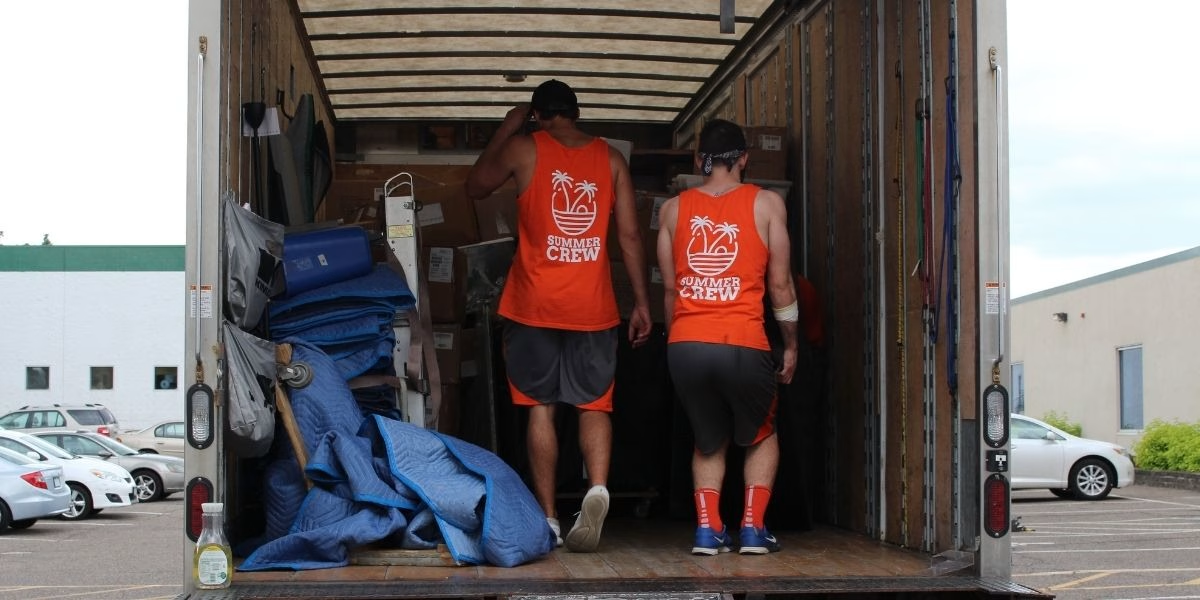
Summer is the most popular time to move in Minnesota, and by a significant margin. If you’re looking for summer moving tips specific to the Twin Cities, you’re in the right place. Based on the last five years of CMM move data, more than a third of our annual moves take place in June, July, and August alone. Add September and that number climbs to nearly half of all moves in just four months.
That kind of demand has a real impact on how you should plan a summer move in the Twin Cities. This guide covers what’s actually different about moving in summer, from booking timelines and logistics to staying safe in the heat, based on our experience completing thousands of local moves across the Minneapolis and St. Paul metro.
Summer Moving Tips for Minnesota: The Short Answer
Summer moving tips for Minnesota: book your movers 4 to 6 weeks out at minimum, plan for road construction delays, lock in your elevator or parking permits early, and stay hydrated on moving day. Heat affects your energy more than your belongings. Your movers know what they’re doing, but you’ll feel it too.
Book Earlier Than You Think
This is the single most important piece of summer moving advice, and the data backs it up clearly.
Looking at five years of CMM moves, summer customers book significantly further in advance than the annual average. August moves book an average of nearly 26 days out. May and June moves book about 23 days out. Compare that to the overall average of just over 15 days. Summer customers are booking 50 to 65% further ahead than typical.
That gap exists because they have to. The best moving crews fill up fast during peak season. If you’re planning a June, July, or August move and you’re reading this in the month before, call now.
Waiting for a convenient time to shop around is a risk during summer in a way it simply isn’t in November.
A few things to confirm when you book:
- Your move date and start time
- Inventory of everything your movers will handle, including large furniture and specialty items
- Cancellation and rescheduling policies (these matter more in peak season when rebooking is harder)
- Any parking or elevator logistics at either address
Plan for Summer Logistics in Minneapolis and Saint Paul
Summer adds a layer of logistical complexity that doesn’t exist the rest of the year.
Parking is more competitive. Summer weekends bring more foot traffic, outdoor events, and general activity to Twin Cities neighborhoods. Parking spots near your building that are easy to claim in February may require a permit or creative timing in July. If your building or neighborhood requires a parking permit for a moving truck, request it well in advance. City processes can take time, and summer is when everyone else is making the same request.
Elevator reservations fill up. If you’re moving into or out of an apartment or condo, most buildings require advance booking for elevator use during a move. Summer is when competition for those slots is highest. Contact your building manager as soon as your move date is confirmed. Some buildings book out weeks ahead during peak season.
Road construction season. This is a Minnesota reality that doesn’t show up in any national moving guide. Summer is construction season, and drives across the metro that take 20 minutes in winter can take 45 in July. At CMM, we will always take the fastest route, but some smaller roads don’t allow trucks due to weight limits. The route your moving truck takes may be affected differently than your own route. Build extra time into your day and don’t be surprised if the truck arrives at your new address via a different path.

What’s Actually Different About Moving in Summer Heat
Here’s where a lot of generic moving advice overstates things, and where our experience tells a different story.
Move times don’t meaningfully increase in summer. Based on five years of CMM data, average move duration in June, July, and August is essentially in line with the annual average. The heat doesn’t slow professional crews down in a measurable way. Any fatigue effect from summer heat is roughly offset by the extra time winter moves require to navigate snow, ice, and cold.
The truck isn’t a danger zone for your belongings on a local move. Several moving guides suggest that truck interiors reach dangerous temperatures that will damage your items. In practice, items are boxed, wrapped, and loaded promptly. They’re not sitting in direct sun. Electronics, artwork, and furniture all travel wrapped in furniture pads and shrink wrap, protected from both heat and light. The truck’s interior gets warm, but not in a way that damages properly packed items during a standard local move.
For a cross-country move, the calculus is different. When items spend many hours or even days in a truck during summer heat, the risk increases meaningfully. If you’re doing a long-distance move, we’d recommend transporting electronics and vinyl records in a climate-controlled personal vehicle as an extra precaution if possible.
The one real exception is food. Perishable items spoil significantly faster in summer heat. Refrigerators are typically among the last items loaded and first unloaded, but even so, your refrigerated and frozen food is at risk during any move. Our recommendation: use up what you have in the days before your move and restock at your new home. It’s simpler and safer than trying to move a full refrigerator’s worth of food in July.
The physical toll is what really gets harder during summer. Moving is demanding work in any weather. The summer heat and humidity make the hard work even harder. This applies to you as much as your crew.
Staying Safe and Energized on a Hot Moving Day
Hydration is the priority, not just water. Water is good, but electrolytes are better. CMM provides Gatorade to our crews before they leave the warehouse, because electrolyte replacement matters more than pure water volume during sustained physical activity in heat. Keep a cooler at the truck with water and sports drinks accessible throughout the day, for you and for anyone helping you move.
Dress for the work. Breathable fabrics, athletic shoes with good grip, and shorts. This isn’t the day for jeans and old sneakers. Closed-toe shoes are non-negotiable when you’re carrying heavy items.
The right food matters.Balance short-term and long-term energy sources. The goal is to sustain performance through a full move, not just the first few hours. A lunch break between loading and unloading is important. Not just a rest, but actual fuel. CMM builds this break into longer moves, and it’s off the clock. Taking it seriously is what allows the unload to go as well as the load.
Know your limits. The most common summer moving mistake isn’t skipping water. It’s pushing too hard and running out of steam during the unload. The end of the move is when your attention matters most: placing furniture correctly, checking for damage, doing a final walkthrough. Pace yourself so you’re functional at the finish line, not just the starting line.
Heat exhaustion is real. Signs include heavy sweating, dizziness, headache, and nausea. If you or anyone helping you move shows these symptoms, stop and get into air conditioning. This is serious. Don’t push through it.

A Few Minnesota Specific Notes
Humidity amplifies heat. Minnesota summers are humid, and humid heat is harder on the body than dry heat at the same temperature. A 90-degree day in the Twin Cities feels different than 90 degrees in a dry climate. Factor this in when you’re planning your day and managing your energy.
Long days work in your favor. Minnesota summer days are long. If your move runs later than expected, you have daylight to work with. This is a genuine advantage compared to winter moves, where you can run out of light by late afternoon.
Weather changes fast. Twin Cities summer weather is unpredictable. Afternoon thunderstorms are common and can arrive quickly. Keep an eye on the forecast in the days leading up to your move, and have a plan for protecting boxes and furniture during loading and unloading if rain arrives.
The Summer Moving Checklist
This checklist covers the summer-specific items worth tracking. For a complete week-by-week moving timeline covering every phase of your move, see the Ultimate Moving Checklist.
4 to 6 weeks out
Book your movers (don’t wait)
Reserve elevator or loading dock at your building if applicable
Request parking permits for the moving truck if needed in your neighborhood
Confirm utilities at your new address are scheduled for move-in day
1 to 2 weeks out
Confirm move details with your moving company
Check weather forecast and have a rain plan
Start using up refrigerated and frozen food you don’t want to move
Plan your route and check for construction closures
Moving day
Set up a cooler with water and sports drinks at the truck
Wear breathable clothes and closed-toe shoes
Plan a real lunch break between load and unload
Keep kids and pets in a cool, separate space during the move
Plan for a slightly longer drive due to construction traffic
FAQs About Summer Moves in Minnesota
How far in advance should I book for a summer move in Minnesota?
Book at least four to six weeks out for a summer move in the Twin Cities — and earlier is always better. Based on five years of CMM data, summer moves book an average of 23 to 26 days in advance, compared to an overall annual average of just over 15 days. The best crews and most desirable time slots fill up fast. If you’re moving in June, July, or August, don’t wait.
What time should I start a summer move?
Earlier is generally better, but CMM doesn’t adjust its standard start times by season. What matters more than the exact hour is being ready when your crew arrives: home prepped, paths clear, and boxes labeled. If you have flexibility in scheduling your start time, morning hours are more comfortable for everyone on a hot day.
What happens if something gets damaged during my move?
Document any damage before your crew leaves — take photos and note it with your crew lead before signing off on the service paperwork. CMM’s damage coverage policies are outlined in your confirmation document. Under Minnesota law, the minimum coverage is $0.60 per pound, but upgraded valuation coverage plans are available starting at $15. Review your confirmation document for the specifics of your coverage.
Does summer heat make moves take longer?
Based on five years of CMM data, no, not in a meaningful way. Average summer move durations are essentially in line with the annual average. Any heat-related fatigue effect on crews is roughly offset by the extra time winter moves require for snow, ice, and cold conditions.
What should I do with refrigerated or frozen food when moving in summer?
The safest approach is to use up what you have in the days before your move and restock once you’re in your new home. Refrigerators are typically loaded last and unloaded first, but perishables still face risk during any summer move. Trying to transport a full fridge in July adds stress without much benefit.
Are there any summer-specific logistics to plan for in Minneapolis and St. Paul?
Yes, a few. Parking spots near buildings are more competitive in summer, and if your neighborhood or building requires a permit for a moving truck, request it well in advance. Elevator reservations in apartment buildings fill up faster during peak season. Road construction is a genuine factor: summer drives across the Twin Cities metro can take significantly longer than usual. Build extra time into your day.
Ready to book your summer move?
College Muscle Movers is one of the most trusted local moving companies in the Twin Cities, with nearly 20 years of experience and more than 15,000 moves completed. Summer books fast. Get a quote today to check availability for your move date.
About the Author

Morgan Alexander
Moving Specialist